What actually goes in it
The letters people finish are the short, specific ones. Not a full life story — a handful of things said clearly, that hold up on a second reading.
A specific memory
One moment, told in detail — a day, a conversation, a thing they did. Specific beats general every time.
What you're proud of
Name it plainly — a quality, a choice, who they've become. This is usually what a child holds onto longest.
What you hope for them
Not instructions — hopes. Who you'd like them to become, said as a wish, not a rule.
One page, not ten
Brief is what actually gets read — and re-read, years apart, at different ages.
Choosing when it's opened
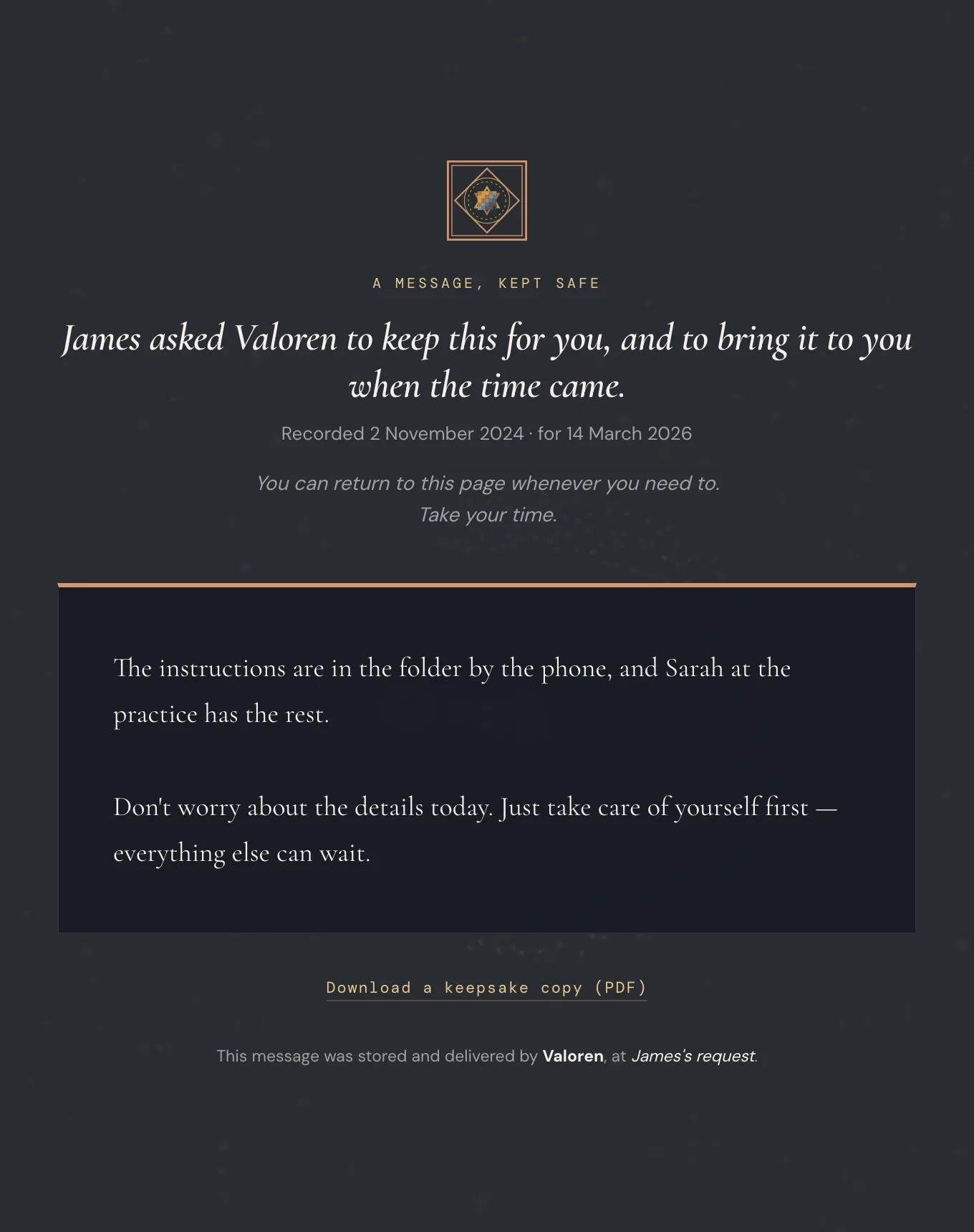
A letter written for "someday" is easy to lose. A sealed message gives you three ways to control the timing, not just the words — sealed, scheduled, or time-capsule — so the letter reaches them at the right moment, not whenever it happens to turn up.
Sealed
Held with your records, released through the same handover as everything else — when it's needed, not on a date you fix today.
Scheduled
Delivered on a specific future date you choose — an 18th birthday, a graduation, a wedding day.
Time-capsule
Opened at a future milestone rather than a fixed date — "when they have children of their own," whenever that comes.
Keeping it safe until then
Write one letter, or one for each child. Both are common. What matters more is where it lives afterwards — held with your records, so it's found through the same handover as your will and everything else, not left for someone to stumble on by chance.
"Held with your records" is more than a manner of speaking, too — sealing a message triggers an automatic copy into a second, independent archive our own systems can add to but never delete from.
Sealed, scheduled and time-capsule messages — unlimited, with an annual review nudge
Write a letter for each child, time it to the moment that matters, and it's held alongside your will and your other 33 records — one system, one handover.
See what's included→Common questions
If this was useful, you might also need —
Legacy letters
What to write, for any reader, not just your children
A memory book that's kept
One memory at a time, not one big letter
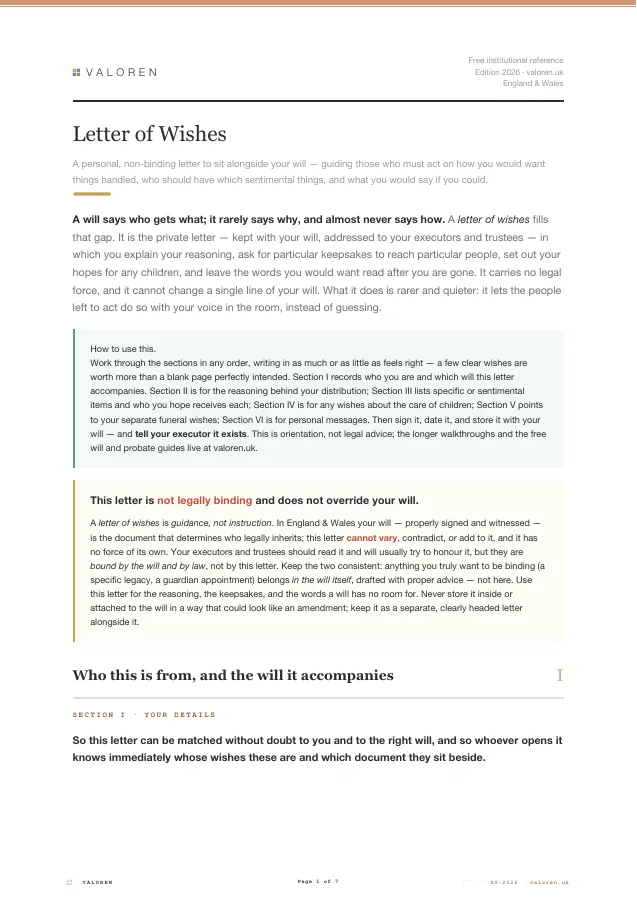
Letter of Wishes
Guardianship and instructions — a different, legal document
Tiers & pricing
Sealed, scheduled and time-capsule messages, included