Skip to content
United States editionIn your inbox within a minute30-day money-back promise
The End of Life Plannerby Valoren

General information · not a substitute for the advice of an attorney.

Free · general informationUnited States

The small estate affidavit, and each state’s own route for a smaller estate

Where a state’s law lets a smaller estate be settled without full probate, this page carries that state’s own words on how, one state at a time: who may use the route, what it covers and what the paperwork must say. Each card is headed with the state’s own name for its route, which is an affidavit in some states and something else in others. Whether a particular estate fits is for the court, the bank or company holding the asset, or an attorney in that state; nothing on this page decides it.

  • Every fact dated, in the official words
  • Each state’s own law

Every quotation checked October 24, 2026 – November 15, 2026How we check

The free first-week checklist

Pages taken from the planner, by email: who to phone first, and a blank records sheet.

We use your email address to send the checklist and those emails, and for nothing else. We do not sell it. We first send one email asking you to confirm your address. Privacy notice

The phone page, free

One sheet: where the passcode is kept, your Apple Legacy Contact, and the recovery codes. It is the planner’s first section, cut short.

Download the phone page (PDF) →

Every quotation on this page is the official body’s own words, as they stood on the day we read them. The date is beside each one.

At a glance

The small estate affidavit, and each state’s own route for a smaller estate

Small estate affidavit
an affidavit in some states and something else in others
  • Small estates in California
  • The small estate affidavit in Texas
  • Summary administration in Florida
  • Voluntary administration in New York
  • Release from administration in Ohio
  • Small estates in Illinois
  • Collection by affidavit in North Carolina
  • No administration necessary, and year’s support in Georgia
Whether a particular estate fits is for the court, the bank or company holding the asset, or an attorney in that state; nothing on this page decides it.

Small estates in California

Excluding the property described in Section 13050 and any property included in a petition filed under Section 13151, if the gross value of the decedent’s real and personal property in this state does not exceed one hundred sixty-six thousand two hundred fifty dollars ($166,250), as adjusted periodically in accordance with Section 890, and if 40 days have elapsed since the death of the decedent, the successor of the decedent may, without procuring letters of administration or awaiting probate of the will, do any of the following with respect to one or more particular items of property:

(a) Collect any particular item of property that is money due the decedent.

(b) Receive any particular item of property that is tangible personal property of the decedent.

(c) Have any particular item of property that is evidence of a debt, obligation, interest, right, security, or chose in action belonging to the decedent transferred, whether or not secured by a lien on real property.

California · general information · checked November 15, 2026 · Cal. Prob. Code §13100

The values in the left column apply to property of a decedent who died between April 1, 2022, and March 31, 2025. The values in the right column apply to property of a decedent who died on or after April 1, 2025.

these values will next be adjusted April 1, 2028.

What it applies toDied on or after April 1, 2022 and before April 1, 2025Died on or after April 1, 2025
§§13100/13101 affidavit$184,500$208,850
§13151 primary residence petition$184,500$750,000
§13200 real property of small value$61,500$69,625
§§6602/6609 set-aside$95,325$107,900
§13050(c) wages excluded$18,450$20,875

For a death before the earlier of those dates, the court’s simple-transfer page gives these amounts:

What it applies toDied before April 1, 2022
§§13100/13101 affidavit$166,250
§13151 primary residence petition$166,250
§13200 real property of small value$55,425
§§6602/6609 set-aside$85,900
§13050(c) wages excluded$16,625

California · general information · checked November 10, 2026 · Judicial Council form DE-300

Assembly Bill 2016 made two important changes to the law for real property. It raised the maximum value of real property for certain petitions to $750,000. It limited this procedure to the decedent's main home in California. This applies to real property petitions under Probate Code sections 13150–13157.

California · general information · checked November 12, 2026 · selfhelp.courts.ca.gov

an affidavit or declaration furnished under Probate Code section 13101

Petition to Determine Succession to Primary Residence (form DE-310)

Affidavit re: Real Property of Small Value (form DE-305)

Spousal or Domestic Partner Property Petition (form DE-221)

California · general information · checked October 24, 2026 · selfhelp.courts.ca.gov; form DE-300


The small estate affidavit in Texas

The distributees of the estate of a decedent who dies intestate are entitled to the decedent's estate without waiting for the appointment of a personal representative of the estate to the extent the estate assets, excluding homestead and exempt property, exceed the known liabilities of the estate, excluding any liabilities secured by homestead and exempt property, if: (1) 30 days have elapsed since the date of the decedent's death;

(2) no petition for the appointment of a personal representative is pending or has been granted;

(3) the value of the estate assets on the date of the affidavit described by Subdivision (4), excluding homestead and exempt property, does not exceed $75,000;

(4) an affidavit that meets the requirements of Section 205.002 is filed with the clerk of the court that has jurisdiction and venue of the estate; (5) the judge approves the affidavit as provided by Section 205.003; and (6) the distributees comply with Section 205.004.

(a) An affidavit filed under Section 205.001 must: (1) be sworn to by: (A) two disinterested witnesses; (B) each distributee of the estate who has legal capacity; and (C) if warranted by the facts, the natural guardian or next of kin of any minor distributee or the guardian of any other incapacitated distributee;

(3) include: (A) a list of all known estate assets and liabilities; (B) the name and address of each distributee; and (C) the relevant family history facts concerning heirship that show each distributee's right to receive estate money or other property or to have any evidence of money, property, or other right of the estate as is determined to exist transferred to the distributee as an heir or assignee.

(b) A list of all known estate assets under Subsection (a)(3)(A) must indicate which assets the applicant claims are exempt.

The judge may approve the affidavit if the judge determines that the affidavit conforms to the requirements of this chapter.

If a decedent's homestead is the only real property in the decedent's estate, title to the homestead may be transferred under an affidavit that meets the requirements of this chapter.

Each person who executed the affidavit is liable for any damage or loss to any person that arises from a payment, delivery, transfer, or issuance made in reliance on the affidavit.

Texas · general information · checked November 15, 2026 · Tex. Est. Code §§205.003, 205.006(a), 205.007(c)

Summary administration in Florida

Summary administration may be had in the administration of either a resident or nonresident decedent's estate, when it appears: (1) In a testate estate, that the decedent's will does not direct administration as required by chapter 733.

(2) That the value of the entire estate subject to administration in this state, less the value of property exempt from the claims of creditors, does not exceed $150,000 or that the decedent has been dead for more than 2 years.

Florida · general information · checked November 10, 2026 · Fla. Stat. §735.201

(1) A petition for summary administration may be filed by any beneficiary or person nominated as personal representative in the decedent’s will offered for probate.

The petition must be signed and verified by the surviving spouse, if any, and any beneficiaries except that the joinder in a petition for summary administration is not required of a beneficiary who will receive a full distributive share under the proposed distribution.

However, formal notice of the petition must be served on a beneficiary not joining in the petition.

Florida · general information · checked November 10, 2026 · Fla. Stat. §735.203

(2) Prior to entry of the order of summary administration, the petitioner shall make a diligent search and reasonable inquiry for any known or reasonably ascertainable creditors, serve a copy of the petition on those creditors, and make provision for payment for those creditors to the extent that assets are available.

(3) The court may enter an order of summary administration allowing immediate distribution of the assets to the persons entitled to them.

(e) The recipients of the decedent’s property under the order of summary administration shall be personally liable for a pro rata share of all lawful claims against the estate of the decedent, but only to the extent of the value of the estate of the decedent actually received by each recipient, exclusive of the property exempt from claims of creditors under the constitution and statutes of Florida.

(f) After 2 years from the death of the decedent, neither the decedent’s estate nor those to whom it may be assigned shall be liable for any claim against the decedent, unless proceedings have been taken for the enforcement of the claim.

Florida · general information · checked November 10, 2026 · Fla. Stat. §735.206

(2) If proof of publication of the notice is filed with the court, all claims and demands of creditors against the estate of the decedent who are not known or are not reasonably ascertainable shall be forever barred unless the claims and demands are filed with the court within 3 months after the first publication of the notice.

Florida · general information · checked November 10, 2026 · Fla. Stat. §735.2063

No administration shall be required or formal proceedings instituted upon the estate of a decedent leaving only personal property exempt under the provisions of s. 732.402, personal property exempt from the claims of creditors under the State Constitution, and nonexempt personal property the value of which does not exceed the sum of the amount of preferred funeral expenses and reasonable and necessary medical and hospital expenses of the last 60 days of the last illness.

Florida · general information · checked November 10, 2026 · Fla. Stat. §735.301

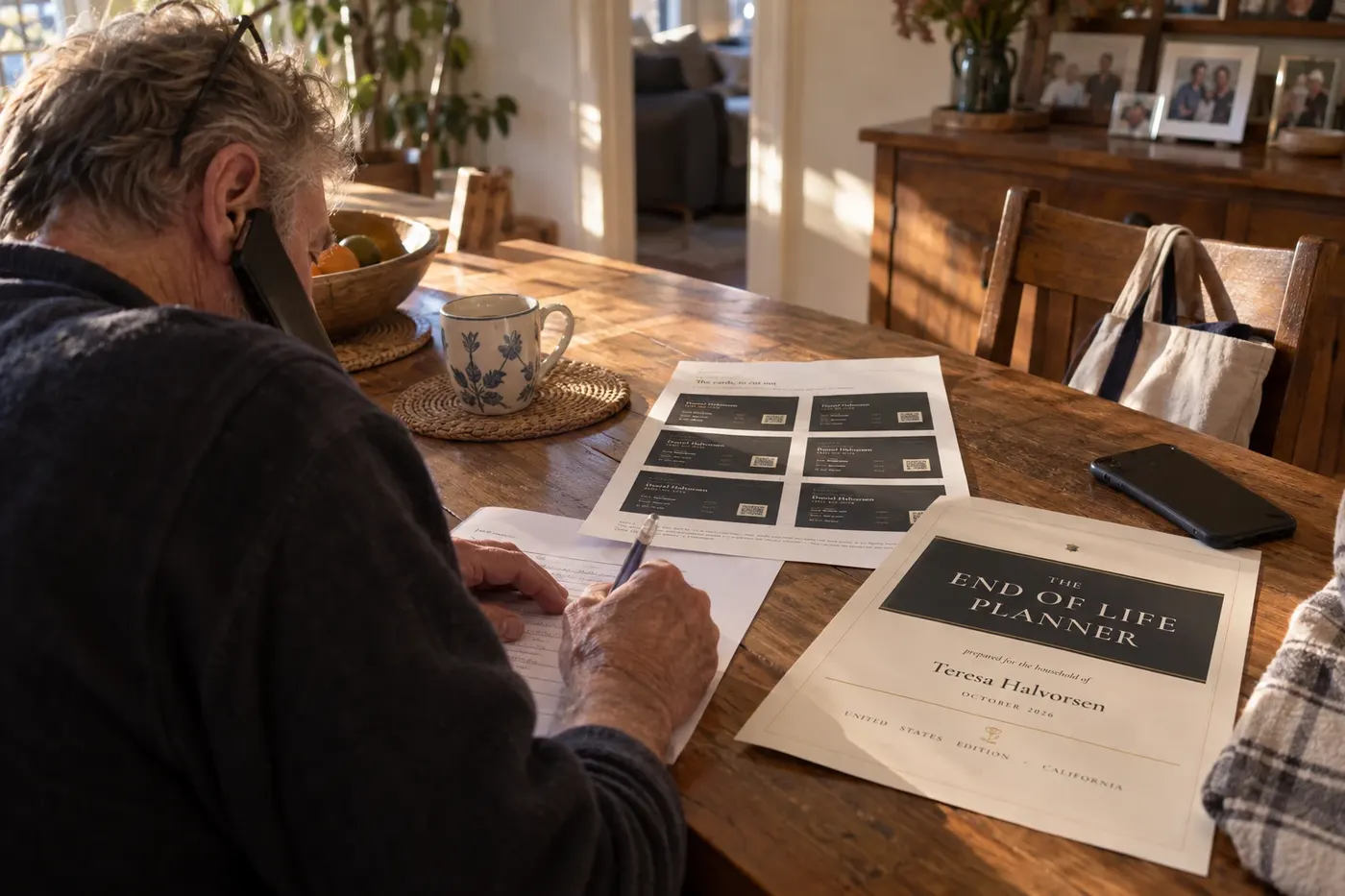
A hand writing on paper beside a laptop at a table in the evening

Each card is headed with the state’s own name for its route.

Voluntary administration in New York

1. A small estate is the estate of a domiciliary or a non-domiciliary who dies leaving personal property having a gross value of $50,000 or less exclusive of property required to be set off under EPTL 5-3.1 (a). 2. A voluntary administrator is a person who qualifies and undertakes to settle the estate of the decedent without the formality of court administration as hereinafter provided.

This article is not applicable to any interest in real property in this state owned by a decedent, but his owner ship of an interest in real property shall not prevent the use of this article in administering his personal property.

New York · general information · checked November 15, 2026 · N.Y. SCPA 1301, 1302

(a) If the deceased dies intestate, the right to act as a voluntary administrator is hereby given first to the surviving adult spouse, if any, of the decedent and if there be none or if the spouse renounce, then in order to a competent adult who is a child or grandchild, parent, brother or sister, niece or nephew or aunt or uncle of the decedent, or if there be no such person who will act, then to the guardian of the property of an infant, the committee of the property of any incompetent person or the conservator of the property of a conservatee who is a distributee and if none of the foregoing named persons will act or if there are no known distributees within the categories listed above, then to the chief fiscal officer of the county except in those counties in which a public administrator has been appointed under articles eleven and twelve of this act.

(b) If the deceased dies testate, the named executor or alternate executor shall have the first right to act as voluntary administrator, upon filing the last will and testament with the surrogate's court.

New York · general information · checked November 15, 2026 · N.Y. SCPA 1303

1. When available. No waiting period after the death of the decedent is required.

2. Bond. The voluntary administrator need not give a bond.

3. Affidavit. A person may qualify as a voluntary administrator by making and filing with the clerk of the court of the decedent's domicile, or in the case of a non-domiciliary, of the county in which his personal property is located, an affidavit in the form provided by the Official Forms appended to this act, and also a certified copy of the death certificate of the decedent.

4. Record. The clerk shall file the affidavit and assign it a number. The clerk shall enter each such proceeding in the records and indexes of the court. The clerk shall charge a fee of $1 for filing the affidavit. No order of the court or other proceeding shall be necessary.

5. Furnishing evidence of qualification and authority. A short certificate of the court showing the filing by the voluntary administrator of the required affidavit, shall evidence his, her or its qualification and authority to act.

New York · general information · checked November 15, 2026 · N.Y. SCPA 1304

Release from administration in Ohio

(A) Subject to division (I) of this section, an estate may be released from administration under division (B) of this section if either of the following applies: (1) The value of the assets of the estate is thirty-five thousand dollars or less.

(2) The value of the assets of the estate is one hundred thousand dollars or less and either of the following applies: (a) The decedent devised and bequeathed in a valid will all of the assets of the decedent's estate to a person who is named in the will as the decedent's spouse, and the decedent is survived by that person.

(b) The decedent is survived by a spouse whose marriage to the decedent was solemnized in a manner consistent with Chapter 3101. of the Revised Code or with a similar law of another state or nation, the decedent died without a valid will, and the decedent's surviving spouse is entitled to receive all of the assets of the decedent's estate under section 2105.06 of the Revised Code or by the operation of that section and division (B)(1) or (2) of section 2106.13 of the Revised Code.

(B) Upon the application of any interested party, after notice of the filing of the application has been given to the surviving spouse and heirs at law in the manner and for the length of time the probate court directs, and after notice to all interested parties by publication in a newspaper of general circulation in the county, unless the notices are waived or found unnecessary, the court, when satisfied that division (A)(1) or (2) of this section is satisfied, may enter an order relieving the estate from administration and directing delivery of personal property and transfer of real property to the persons entitled to the personal property or real property.

(F) If the decedent died testate, the will shall be presented for probate, and, if admitted to probate, the court may relieve the estate from administration and order distribution of the estate under the will.

Ohio · general information · checked November 10, 2026 · Ohio Rev. Code §2113.03

(B)(1) If the value of the assets of the decedent's estate does not exceed the lesser of five thousand dollars or the amount of the decedent's funeral and burial expenses, any person who is not a surviving spouse and who has paid or is obligated in writing to pay the decedent's funeral and burial expenses, including a person described in section 2108.89 of the Revised Code, may apply to the probate court for an order granting a summary release from administration in accordance with this section.

Ohio · general information · checked November 10, 2026 · Ohio Rev. Code §2113.031(B)(1)

What defines a Small Estate? Surviving spouse inherits the entire estate and the gross estate is less than $100,000. Someone other than a surviving spouse inherits and the entire gross estate is less than $35,000.

Note re: 'All to surviving spouse': All of the assets must go to the surviving spouse pursuant to the decedent's Will, or the family allowance, or intestacy under Ohio Revised Code 2105.06 and there must be a marriage pursuant to Ohio Revised Code 3101. This does not include common law marriages under Ohio Revised Code 3105.12.

All probate assets must be reported on the initial application filed with the Court as the Court will not approve the release of partial assets, All interested parties (next of kin, beneficiaries under the Will, and creditors) must be given notice of the filing of the application for release from administration and/or any hearing set on the matter, and The decedent's creditors will not be prejudiced by approval of the application.

Main Types of Small Estates: No Administration · Summary Release from Administration · Real Estate Only

Ohio · general information · checked November 11, 2026 · Franklin County Probate Court, Estates (Small)

Small estates in Illinois

Upon the filing of a petition therefor in the court of the proper county by any interested person and after ascertainment of heirship of the decedent and admission of the will, if any, to probate, if it appears to the court that: (a) the gross value of the decedent's real and personal estate subject to administration in this State as itemized in the petition does not exceed $100,000;

(b) there is no unpaid claim against the estate, or all claimants known to the petitioner, with the amount known by him to be due to each of them, are listed in the petition; (c) no tax will be due to the United States or to this State by reason of the death of the decedent or all such taxes have been paid or provided for or are the obligation of another fiduciary;

Illinois · general information · checked November 10, 2026 · 755 ILCS 5/9-8 (P.A. 99-143, eff. 7-27-15)

Allows heirs avoid to probate by using a simple form to transfer a decedent's personal property

Our office does not charge a filing fee for this form; does not store this form; does not record this form

Public gets this form and uses it with third parties such as banks and insurance companies

Illinois · general information · checked November 10, 2026 · Clerk of the Circuit Court of Cook County, New Laws (Public Act 104-0346)

Collection by affidavit in North Carolina

(a) When a decedent dies intestate leaving personal property, less liens and encumbrances thereon, not exceeding twenty thousand dollars ($20,000) in value, at any time after 30 days from the date of death, any person indebted to the decedent or having possession of tangible personal property or an instrument evidencing a debt, obligation, stock or chose in action belonging to the decedent shall make payment of the indebtedness or deliver the tangible personal property or an instrument evidencing a debt, obligation, stock or chose in action to a person claiming to be the public administrator appointed pursuant to G.S. 28A-12-1, or an heir or creditor of the decedent, not disqualified under G.S. 28A-4-2, upon being presented a certified copy of an affidavit filed in accordance with subsection (b) and made by or on behalf of the heir or creditor or the public administrator stating:

(1) The name and address of the affiant and the fact that the affiant is the public administrator or an heir or creditor of the decedent;

(4) That 30 days have elapsed since the death of the decedent;

(5) That the value of all the personal property owned by the estate of the decedent, less liens and encumbrances thereon, does not exceed twenty thousand dollars ($20,000);

In those cases in which the affiant is the surviving spouse and sole heir of the decedent, not disqualified under G.S. 28A-4-2, the property described in this subsection that may be collected pursuant to this section may exceed twenty thousand dollars ($20,000) in value but shall not exceed thirty thousand dollars ($30,000) in value, after reduction for any spousal allowance paid to the surviving spouse pursuant to G.S. 30-15.

North Carolina · general information · checked November 10, 2026 · N.C. Gen. Stat. §28A-25-1 (history ends 2021-71)

(a) When a decedent dies testate leaving personal property, less liens and encumbrances thereon, not exceeding twenty thousand dollars ($20,000) in value, at any time after 30 days from the date of death, any person indebted to the decedent or having possession of tangible personal property or an instrument evidencing a debt, obligation, stock or chose in action belonging to the decedent shall make payment of the indebtedness or deliver the tangible personal property or an instrument evidencing a debt, obligation, stock or chose in action to a person claiming to be the public administrator appointed pursuant to G.S. 28A-12-1, a person named or designated as executor in the will, devisee, heir or creditor, of the decedent, not disqualified under G.S. 28A-4-2, upon being presented a certified copy of an affidavit filed in accordance with subsection (b) and made by or on behalf of the heir, the person named or designated as executor in the will of the decedent, the creditor, the public administrator, or the devisee, stating:

North Carolina · general information · checked November 10, 2026 · N.C. Gen. Stat. §28A-25-1.1(a)

No administration necessary, and year’s support in Georgia

This form is to be used when filing a petition for an order declaring no administration necessary, pursuant to O.C.G.A. § 53-2-40 et seq., and should only be used when the decedent died intestate (without a will).

Unanimous consent of the heirs at law to the agreed upon division is required according to O.C.G.A. § 53-2-40 (b).

A signed original agreement setting out the heirs' agreed upon distribution of the estate must be attached to the petition.

Signatures of heirs who acknowledge service must be sworn to before a notary public or the clerk of any probate court of this State.

Georgia · general information · checked November 10, 2026 · GPCSF 9; O.C.G.A. §53-2-40

This form is to be used for filing a petition for year's support pursuant to O.C.G.A. § 53-3-1 et seq.

The amount set apart shall be an amount sufficient to maintain the standard of living that the surviving spouse and each minor child had prior to the death of the decedent, for a period of 12 months, taking into consideration the following:

(a) the support available to the individual for whom the property or money is to be set apart, from sources other than year’s support, including, but not limited to, any separate estate and earning capacity of that individual;

and (b) such other relevant criteria as the Court deems equitable and proper, including the solvency of the estate.

This petition must be filed within 24 months after decedent's death.

The petitioner(s) or his/her/their attorney must prepare and file with the Court, no later than the date of the final order, a Georgia Department of Revenue Form PT-61 for each parcel of real property located in the State of Georgia shown on “Exhibit A.”

Georgia · general information · checked November 15, 2026 · GPCSF 10; O.C.G.A. §53-3-1

The small estate affidavit in Virginia

A. Any person having possession of a small asset shall pay or deliver the small asset to the designated successor of the decedent upon being presented an affidavit made by all of the known successors stating: 1. That the value of the decedent's entire personal probate estate as of the date of the decedent's death, wherever located, does not exceed $75,000;

2. That at least 60 days have elapsed since the decedent's death; 3. That no application for the appointment of a personal representative is pending or has been granted in any jurisdiction; 4. That the decedent's will, if any, was duly probated;

The affidavit shall be on a form prepared by the Office of the Executive Secretary of the Supreme Court of Virginia.

Virginia · general information · checked November 15, 2026 · Va. Code §64.2-601

A. Notwithstanding the provisions of § 64.2-601, any person having possession of a small asset valued at $35,000 or less may pay or deliver the small asset to any successor provided that: 1. At least 60 days have elapsed since the decedent's death; and 2. No application for the appointment of a personal representative is pending or has been granted in any jurisdiction.

Virginia · general information · checked November 10, 2026 · Va. Code §64.2-602

Pursuant to Virginia Code § 64.2-601(A), this form should be signed by all known successors of the decedent's (deceased person's) estate. A successor is any person, other than a creditor, who is entitled under the decedent's will or the laws of intestacy to part or all of a small asset. Each successor's signature must be notarized.

this form should only be used when the value of the deceased person's entire personal probate estate as of the date of death does not exceed $75,000.

Virginia · general information · checked November 15, 2026 · Va. form CC-1685 (instructions)

The small estate affidavit in Washington

(1) At any time after forty days from the date of a decedent's death, any person who is indebted to or who has possession of any personal property belonging to the decedent or to the decedent and his or her surviving spouse or surviving domestic partner as a community, which debt or personal property is an asset which is subject to probate, shall pay such indebtedness or deliver such personal property, or so much of either as is claimed, to a person claiming to be a successor of the decedent upon receipt of proof of death and of an affidavit made by said person which meets the requirements of subsection (2) of this section.

(c) That the value of the decedent's entire estate subject to probate, not including the surviving spouse's or surviving domestic partner's community property interest in any assets which are subject to probate in the decedent's estate, wherever located, less liens and encumbrances, does not exceed one hundred thousand dollars;

(f) That all debts of the decedent including funeral and burial expenses have been paid or provided for;

(h) That the claiming successor has given written notice, either by personal service or by mail, identifying his or her claim, and describing the property claimed, to all other successors of the decedent, and that at least ten days have elapsed since the service or mailing of such notice;

(5) A copy of the affidavit, including the decedent's social security number, shall be mailed to the state of Washington, department of social and health services, office of financial recovery.

Washington · general information · checked November 15, 2026 · RCW 11.62.010(2)(h), (5)

Summary distribution in Alabama

(2) ESTATE. All the personal property of a decedent who owns no real property at the time of his or her death for which title does not pass by operation of law.

(6) SMALL ESTATE. An estate having a value that does not exceed the small estate amount.

Alabama · general information · checked November 10, 2026 · Code of Ala. §43-2-691(2), (6) (Act 2025-431)

The small estate amount shall at all times be equal to the combined maximum amount of the homestead allowance, exempt property, and family allowance provided under Sections 43-8-110 through 43-8-113, as adjusted pursuant to Section 43-8-116.

Alabama · general information · checked November 10, 2026 · Code of Ala. §43-2-696.02 (Act 2025-431)

the State Treasurer shall adjust each dollar amount in this article

The State Treasurer shall publish the adjusted amounts. The adjusted amounts apply to exemptions claimed on or after April 1 following the adjustment date.

Alabama · general information · checked November 10, 2026 · Code of Ala. §43-8-116

(a) A person, or a person duly authorized to act for the person, entitled to an interest in a small estate under this division may initiate a proceeding for summary distribution of the estate by filing a verified petition in the office of the judge of probate of the county in which the decedent was domiciled at death. No bond shall be required to be filed with the petition.

(1) At least 30 days have elapsed since the notice of the filing of the petition was published as provided in subsection (c);

(2) At least 30 days have elapsed since the Alabama Medicaid Agency received notice of the filing of the petition

Alabama · general information · checked November 10, 2026 · Code of Ala. §43-2-692(a), (d)

(a) Upon finding that the applicable requirements enumerated in this division have been met, the judge of probate shall enter an order directing summary distribution of the estate delineating the portion of the small estate that each person identified in the order is entitled.

Alabama · general information · checked November 10, 2026 · Code of Ala. §43-2-693(a)

Collection by affidavit in Alaska

Thirty days after the death of a decedent, any person indebted to the decedent or having possession of tangible personal property or an instrument evidencing a debt, obligation, stock, or chose in action belonging to the decedent shall make payment of the indebtedness or deliver the tangible personal property

the entire estate, wherever located, less liens and encumbrances, consists only of not more than

vehicles subject to registration under AS 28.10.011 with a total value that does not exceed $100,000; and

personal property, other than vehicles described in (A) of this paragraph, that does not exceed $50,000;

30 days have elapsed since the death of the decedent;

Alaska · general information · checked November 10, 2026 · AS 13.16.680(a)

An Affidavit for Collection of Personal Property allows a person to transfer the personal property without having to open a probate court case.

The person who died did not own any real property (land or buildings attached to land), no matter how small the value of the real property, or they had real property but it passed automatically to someone else because they were tenants by the entirety or there was a Transfer on Death Deed.

Affidavit for Collection of Personal Property of Decedent, P-110

You can do this before a notary or a court clerk.

Any person who has a right to the property of the person who died, other than a creditor, can collect the property by signing the Affidavit.

The person named as the Personal Representative in the Will.

A beneficiary named in the Will.

An heir of the person who died if there is no Will.

Alaska · general information · checked November 10, 2026 · Alaska Court System, Self-Help Center: Probate

If it appears from the inventory and appraisal that the value of the entire estate, less liens and encumbrances, does not exceed homestead allowance, exempt property, family allowance, costs and expenses of administration, reasonable funeral expenses, and reasonable and necessary medical and hospital expenses of the last illness of the decedent, the personal representative, without giving notice to creditors, may immediately disburse and distribute the estate

Alaska · general information · checked November 10, 2026 · AS 13.16.690

still requires filing an informal probate case and some court interaction.

Alaska · general information · checked November 10, 2026 · Alaska Court System, Self-Help Center: Informal Probate

Small estate affidavits in Arizona

B. Thirty days after the death of a decedent, any person indebted to the decedent or having possession of tangible personal property or an instrument evidencing a debt, obligation, stock or chose in action belonging to the decedent shall make payment of the indebtedness or deliver the tangible personal property or an instrument evidencing a debt, obligation, stock or chose in action to a person claiming to be the successor of the decedent on being presented an affidavit made by or on behalf of the successor and stating that all of the following are true:

the value of all personal property in the decedent's estate, wherever located, less liens and encumbrances, does not exceed $200,000 as valued as of the date of death.

E. Not sooner than six months after the death of a decedent, a person or persons claiming as successor or successors to the decedent's interest in real property, including any debt secured by a lien on real property, may file in the court in the county in which the decedent was domiciled at the time of death, or if the decedent was not domiciled in this state then in any county in which real property of the decedent is located, an affidavit describing the real property and the interest of the decedent in that property and stating that all of the following are true and material and acknowledging that any false statement in the affidavit may subject the person or persons to penalties relating to perjury and subornation of perjury:

does not exceed $300,000 as valued at the date of death.

the registrar shall issue a certified copy of the affidavit without attachments, and the copy shall be recorded in the office of the recorder in the county where the real property is located.

Arizona · general information · checked November 10, 2026 · A.R.S. §14-3971(E)–(F)

Increases the limit of the value of all personal property in a decedent's estate that can be claimed by a successor of a decedent through an affidavit, from $75,000 to $200,000.

Increases the limit of the value of all real property in a decedent's estate that can be claimed by a successor of a decedent through an affidavit, from $100,000 to $300,000.

Arizona · general information · checked November 10, 2026 · Laws 2025, ch. 24 (HB 2116)

PBSE11f Affidavit for Collection of All Personal Property

✓ Filing: No. This affidavit may be used once it is complete. It does not get filed with the Court.

PBSE12f Affidavit for Transfer of Title to Real Property

✓ Filing: Yes. You must file this affidavit with the Clerk of Superior Court once it is complete.

Arizona · general information · checked November 10, 2026 · Maricopa County Superior Court, PBSE1

A. At any time after the death of a decedent, any employer owing wages, salary or other compensation for personal services of the decedent shall pay to the surviving spouse of the decedent the amount owing, not in excess of $5,000, on being presented an affidavit

Arizona · general information · checked November 10, 2026 · A.R.S. §14-3971(A)

If it appears from the inventory and appraisal that the value of the entire estate, less liens and encumbrances, does not exceed allowance in lieu of homestead, exempt property, family allowance, costs and expenses of administration, reasonable funeral expenses, and reasonable and necessary medical and hospital expenses of the last illness of the decedent, the personal representative, without giving notice to creditors, may immediately disburse and distribute the estate

Arizona · general information · checked November 10, 2026 · A.R.S. §14-3973

The small estate affidavit in Arkansas

The distributee of an estate may collect and distribute the assets of an estate under this section without the appointment of a personal representative when:

Forty-five (45) days have elapsed since the death of the decedent;

the value of the decedent's homestead and the value of any statutory allowances for the benefit of a spouse or minor children, if any, shall be excluded;

One (1) or more of the distributees files an affidavit with the probate clerk of the circuit court of the county of proper venue for administration stating:

A copy of the affidavit certified by the clerk is furnished to any person owing any money, having custody of any property, or acting as registrar or transfer agent of any evidence of interest, indebtedness, property, or right.

That there are no unpaid claims or demands against the decedent or his or her estate

An itemized description and valuation of the personal property and a legal description and valuation of any real property of the decedent, including the homestead;

The names, addresses, and relationship to the decedent of the persons entitled to and who will receive the property;

Arkansas · general information · checked November 10, 2026 · Ark. Code §28-41-101(a)(1)(D)(i), (ii), (iv), as amended by Act 423 of 2021

All persons having claims against the estate must exhibit them, properly verified, to the distributee or his or her attorney within three (3) months from the date of the first publication of this notice or they shall be forever barred and precluded from any benefit of the estate.

Arkansas · general information · checked November 10, 2026 · Ark. Code §28-41-101(b)(2)(B), as amended by Act 526 of 2015, §1

The distributee of an estate may open a checking account or savings account in a bank within this state in the name of the estate and on behalf of the estate without filing a petition for probate and administration

Arkansas · general information · checked November 10, 2026 · Ark. Code §28-41-101(a)(2), as amended by Act 423 of 2021

Collection by affidavit in Colorado

b) At least ten days have elapsed since the death of (decedent)

c) The total fair market value of all property owned by the decedent and subject to disposition by will or intestate succession at the time of the decedent’s death, wherever that property is located, less liens and encumbrances, does not exceed, for year of death (Y.O.D.): Y.O.D 2026 is $88,000; Y.O.D. 2025 is $86,000; Y.O.D. 2024 is $82,000; Y.O.D. 2023 is $80,000;

I submit this affidavit under C.R.S. § 15-12-1201.

the affiant, am either a successor of the decedent or a person acting on behalf of one or more of the decedent's successors, and I am 18 years of age or older.

d) This affidavit is not valid for the transfer of real estate.

e) No application or petition for the appointment of a personal representative is pending or has been granted in any jurisdiction.

Subscribed and affirmed, or sworn to before me

Colorado · general information · checked November 10, 2026 · JDF 999 (R: April 28, 2026)

The small estates procedure in Connecticut

If the aggregate value of a decedent's solely owned tangible and intangible personal property, excluding property that passes outside of probate by operation of law, does not exceed forty thousand dollars and the decedent had no solely owned real property in this state at the time of his or her death: (1) The decedent's surviving spouse; or (2) if there is no surviving spouse, any of the decedent's next of kin

file an affidavit signed under penalty of false statement in the Probate Court in the district in which the decedent resided.

Sections 45a-273 and 45a-274 shall apply only to estates of decedents for whom no will is presented for probate or no application for administration is filed within thirty days after death.

On receipt of an affidavit, the court shall send a copy of the affidavit to the Department of Administrative Services. The court shall not issue a decree until thirty days after the date on which a copy of the affidavit was sent to the department.

Connecticut · general information · checked November 10, 2026 · Conn. Gen. Stat. §45a-275; §45a-273(c)

Affidavit in Lieu of Probate of Will/Administration

The small estates procedure may be used only if both of the following conditions are met: (a) the decedent had no solely owned real estate and (b) the total value of all of the decedent’s personal property does not exceed $40,000.

Attach a copy of the decedent’s death certificate (with the social security number redacted).

Connecticut · general information · checked November 10, 2026 · Connecticut Probate Courts form PC-212 (rev. 07/23)

The court shall issue a decree authorizing each holder or registrant of an asset of the decedent to: (1) Transfer the asset directly to specified persons or entities; (2) pay amounts from the asset to specified persons or entities; or (3) transfer the asset to the person filing the affidavit, to be sold and the proceeds paid to specified persons or entities.

Connecticut · general information · checked November 10, 2026 · Conn. Gen. Stat. §45a-273(d)

The small estate affidavit in Delaware

(1) No petition for the appointment of a personal representative is pending or has been granted. (2) Thirty days have elapsed since the death of the decedent. (3) The value of the personal estate of the decedent other than property described in § 1901(b) and (c) of this title and other than jointly owned property, does not exceed $50,000.

(6) Decedent did not own real estate in Delaware, either solely or as tenants in common.

The spouse of a decedent or any person who is a grandparent of the decedent, a lineal descendant of a grandparent of the decedent, the personal representative of any of the foregoing who may be deceased, or the guardian or trustee of any of the foregoing who may be incapacitated, or the trustee of a trust created by the decedent, a funeral director licensed in this State, or the named executor or executors in the decedent’s will if the named executor or executors satisfies all qualifications set forth in § 1508 of this title, shall be entitled to the personal estate of the decedent for the purpose of making distribution thereof in accordance with the decedent’s will or, if there be no will, with Chapter 5 of this title without awaiting the appointment of a personal representative or probate of a will upon executing an affidavit attesting to all of the following under oath:

(4) All known debts of the decedent are paid or provided for. (5) The surviving spouse’s allowance, pursuant to § 2308 of this title, has been paid, provided for, waived or has expired by lapse of time pursuant to § 2308(b) of this title.

Nothing in subsection (a) of this section shall preclude the Register of Wills from issuing an affidavit when and where appropriate.

To take possession of the decedent’s motor vehicle or vehicles.

To enter any premises for the sole and exclusive purpose of removing from the premises clothing belonging to the decedent to be used for the burial or viewing of the decedent.

The register of wills shall provide a form limited to facilitating action taken pursuant to this subsection. Such a form must be obtained prior to any person acting pursuant to this subsection.

Delaware · general information · checked November 10, 2026 · 12 Del. C. §2306(c)(1)–(3)

Collection by affidavit in Hawaii

I am the successor of the above named decedent. A certified copy of the death certificate is submitted with this affidavit.

The gross value of the decedent’s estate in this State (excluding the value of motor vehicles) does not exceed $100,000.00.

No application or petition for the appointment of a personal representative is pending or has been granted in this State.

I am entitled to payment or delivery of the property referred to above and itemized below by virtue of HRS Section 560:3-1201, as amended, and by virtue of my relationship to the decedent indicated above.

The person paying, delivering, transferring, or issuing personal property or the evidence thereof pursuant to affidavit is discharged and released to the same extent as if that person dealt with a personal representative of the decedent.

Hawaii · general information · checked November 10, 2026 · Hawai‘i Judiciary form 3C-E-210 (printing HRS §560:3-1202)

Affidavit for Collection of Personal Property of the Decedent

3C-E-210

Affidavit for Collection of Personal Property (Automobile) of the Decedent

3C-E-312

Hawaii · general information · checked November 10, 2026 · Third Circuit forms 3C-E-210, 3C-E-312

Where more than one person has equal standing to present an affidavit of collection, the person holding the asset to be collected shall transfer the asset to the first person who presents an affidavit in proper form

When a personal representative discovers after the commencement of a proceeding that the assets of the estate are greater in amount than originally thought, and that the value of the assets thereby exceeds the proper jurisdictional amount for a small estates proceeding, the personal representative shall petition the court for change to informal, formal, or supervised proceedings.

Hawaii · general information · checked November 10, 2026 · Haw. Prob. R. 91, 92

Small estates in Idaho

Thirty (30) days after the death of a decedent, any person indebted to the decedent or having possession of tangible personal property or an instrument evidencing a debt, obligation, stock or chose in action belonging to the decedent shall make payment of the indebtedness or deliver the tangible personal property or an instrument evidencing a debt, obligation, stock or chose in action to a person or entity claiming to be the successor of the decedent upon being presented an affidavit made by or on behalf of the successor stating that:

The fair market value of the entire estate of the decedent which is subject to probate, wherever located, less liens and encumbrances, does not exceed one hundred thousand dollars ($100,000);

Thirty (30) days have elapsed since the death of the decedent;

upon being presented an affidavit made by or on behalf of the successor stating that:

No application or petition for the appointment of a personal representative or for summary administration is pending or has been granted in any jurisdiction; and

The claiming successor is entitled to payment or delivery of the property, including entitlement as a trust pursuant to a will of the decedent.

Idaho · general information · checked November 10, 2026 · Idaho Code §15-3-1201(a)

Upon the testate or intestate death of a person leaving a surviving spouse as the sole devisee or beneficiary, the surviving spouse (or any person claiming title to any property through or under such surviving spouse) may file a verified petition setting out marriage and the death

the surviving spouse shall assume and be liable for any and all indebtedness that might be a claim against the estate of the decedent and there will be no administration of the estate of the decedent.

If it appears from the inventory and appraisal that the value of the entire estate, less liens and encumbrances, does not exceed homestead allowance, exempt property, costs and expenses of administration, reasonable funeral expenses, and reasonable and necessary medical and hospital expenses of the last illness of the decedent, the personal representative, without giving notice to creditors, may immediately disburse and distribute the estate to the persons entitled thereto and file a closing statement as provided in section 15-3-1204 of this part.

Idaho · general information · checked November 10, 2026 · Idaho Code §15-3-1203

The small estate affidavit in Indiana

(a) Forty-five (45) days after the death of a decedent and upon being presented an affidavit that complies with subsection (b), a person:

(1) That the value of the gross probate estate, wherever located, (less liens, encumbrances, and reasonable funeral expenses) does not exceed:

(B) fifty thousand dollars ($50,000), for the estate of an individual who dies after June 30, 2006, and before July 1, 2022; and (C) one hundred thousand dollars ($100,000), for the estate of an individual who dies after June 30, 2022.

(3) That no application or petition for the appointment of a personal representative is pending or has been granted in any jurisdiction.

(b) The affidavit required by subsection (a) must be an affidavit made by or on behalf of the distributee

(5) That the affiant has notified each distributee identified in the affidavit of the affiant's intention to present an affidavit under this section.

nothing in this section shall prohibit a transfer of the certificate of title to the motor vehicle if five (5) days have elapsed since the death of the decedent and no appointment of a personal representative is contemplated.

(b) Except as otherwise provided in this section, if the value of a decedent's gross probate estate, less liens and encumbrances, does not exceed the sum of:

(C) one hundred thousand dollars ($100,000), for the estate of an individual who dies after June 30, 2022;

(2) the costs and expenses of administration; and (3) reasonable funeral expenses;

the fiduciary, without giving notice to creditors, may disburse and distribute the estate to the persons entitled to it, followed by the filing of a closing statement

Indiana · general information · checked November 10, 2026 · IC 29-1-8-3(b)

Small estates in Iowa

(3) That the decedent’s probate assets consist only of personal property, with no interest in real estate, and that the gross value of the decedent’s personal property is, or has been at any time since the decedent’s death, one hundred thousand dollars or less.

Iowa · general information · checked November 10, 2026 · 2026 Iowa Acts ch. 1048 §3 (amending Iowa Code §633.356(3)(a)(3))

Effective date: 07/01/2026.

Iowa · general information · checked November 10, 2026 · H.F. 2660 (2026), bill history

and if forty days have elapsed since the death of the decedent, a successor as defined in subsection 2 may, by furnishing an affidavit prepared pursuant to subsection 3 or 8, and without procuring letters of appointment

(2) That at least forty days have elapsed since the death of the decedent, as shown by an attached certified copy of the death certificate of the decedent.

If there are two or more successors, any of the successors may execute an affidavit under this subsection.

The procedure provided by this section may be used only if no administration of the decedent’s estate is pending.

(12) That the affiant affirms under penalty of perjury that the affidavit is true and correct.

(11) That creditors, if any, will be paid to the extent of funds received pursuant to the affidavit.

(6) If applicable pursuant to subsection 2, paragraph “a”, that the attached copy of the decedent’s will is the last will of the decedent and has been delivered to the office of a clerk of the district court in accordance with Iowa law.

Iowa · general information · checked November 10, 2026 · Iowa Code §633.356(3)(a)(6), (11), (12)

When the gross value of the probate assets of a decedent subject to the jurisdiction of this state does not exceed two hundred thousand dollars, and upon a petition as provided in section 635.2 of an authorized petitioner in accordance with sections 633.227 and 633.228, or section 633.290, subsection 1, paragraph “a” or “b”, the clerk shall issue letters of appointment for administration to the proposed personal representative named in the petition, if qualified to serve pursuant to section 633.63 or upon court order pursuant to section 633.64.

Iowa · general information · checked November 10, 2026 · Iowa Code §635.1

The small estate affidavit, and refusal of letters in Kansas

(a) When a resident of the state dies, whether testate or intestate, if the total assets of the estate of the decedent subject to probate do not exceed $75,000 in value, any personal property of whatever nature transferable to the decedent's estate by any entity or person shall be transferred to a person claiming to be a successor of the decedent

without having been granted letters of administration or letters testamentary, upon such successor furnishing the entity or person with an affidavit showing entitlement thereto.

(1) Entitled to the property by will or by intestate succession; or (2) nominated as a personal representative under the decedent's will.

The affidavit required herein shall be deemed sufficient if in substantial compliance with the form set forth by the judicial council.

Kansas · general information · checked November 10, 2026 · K.S.A. 59-1507b(b)–(c)

(2) When the real and personal estate of the decedent does not exceed $75,000 and the estate is not subject to allowances pursuant to K.S.A. 59-403, and amendments thereto, or such allowances are waived, any heir, devisee, legatee, creditor or other interested person may petition for refusal of letters by giving bond in the sum of not less than the value of the estate.

Kansas · general information · checked November 10, 2026 · K.S.A. 59-2287(a)(2)

Dispensing with administration in Kentucky

Where the exemption for the surviving spouse or children, alone or together with preferred claims

equals or exceeds the amount of distributable assets, the court may order that administration of the estate be dispensed with and the assets be transferred to the surviving spouse or, if there is no surviving spouse, to the surviving children, or to a person designated by the surviving spouse.

Kentucky · general information · checked November 10, 2026 · KRS 395.455(1)

Personal property or money on hand or in a bank or other depository to the amount of thirty thousand dollars ($30,000) shall be exempt from distribution and sale and shall be set apart by the District Court having jurisdiction over the estate on application to the surviving spouse, or, if there is no surviving spouse, to the surviving children.

Kentucky · general information · checked November 10, 2026 · KRS 391.030(1)(c)

The court may order that the administration of the estate be dispensed with and the assets transferred in favor of a preferred creditor or other person where:

(b) There is no surviving spouse or surviving children, and another person has paid preferred claims or is legally entitled to payment.

Kentucky · general information · checked November 10, 2026 · KRS 395.455(3)

The District Court that has jurisdiction to grant administration of the estate of a person dying intestate shall have jurisdiction of proceedings to dispense with administration.

Kentucky · general information · checked November 10, 2026 · KRS 395.450

an order authorizing the surviving spouse to withdraw from any bank or other depository not exceeding two thousand five hundred dollars ($2,500) belonging to the estate.

Kentucky · general information · checked November 10, 2026 · KRS 391.030(2)

Small successions in Louisiana

(1) The succession of a person who died domiciled in Louisiana and who died leaving property with a gross value of two hundred thousand dollars or less valued as of the date of death.

(2) The ancillary succession of a person who died domiciled outside of Louisiana and who died leaving property in Louisiana with a gross value of one hundred twenty-five thousand dollars or less valued as of the date of death.

Louisiana · general information · checked November 10, 2026 · La. C.C.P. art. 3421

SUCCESSIONS: Provides relative to small successions

Effective date: 08/01/2026.

Louisiana · general information · checked November 10, 2026 · Acts 2026, No. 293 (HB 215)

It shall not be necessary to open judicially the small succession of any of the following persons:

(1) A person domiciled in Louisiana who died intestate.

(2) A person domiciled in Louisiana who died testate leaving no immovable property in Louisiana, if the surviving spouse, all persons who would inherit under the testament, and all other persons who would inherit in the absence of a testament agree to waive probate of the testament.

Louisiana · general information · checked November 10, 2026 · La. C.C.P. art. 3431(A)

at least two persons, including the surviving spouse, if any, and one or more heirs of the deceased, may execute one or more multiple originals of an affidavit, duly sworn before any officer or person authorized to administer oaths

If the deceased had no surviving spouse, the affidavit shall be signed by at least two heirs.

(b) Was given thirty days' notice by United States mail of the affiants' intent to execute an affidavit for small succession and did not object.

Louisiana · general information · checked November 10, 2026 · La. C.C.P. art. 3432(A), (A)(4)(b), (B)

all of the heirs and legatees of the deceased, including the surviving spouse, if any, may execute one or more multiple originals of an affidavit

an affirmation that the deceased died owning no immovable property in Louisiana.

(8) An attachment consisting of a copy of the testament.

Louisiana · general information · checked November 10, 2026 · La. C.C.P. art. 3432.1(A)

shall be full and sufficient authority for the payment of any money or the delivery of any property of the deceased described in the affidavit to the heirs or legatees of the deceased

shall be recorded in the conveyance records of the parish where any immovable property described in the affidavit is situated.

Louisiana · general information · checked November 10, 2026 · La. C.C.P. art. 3434(A), (C)(1)

The small estate affidavit in Maine

Thirty days after the death of a decedent, any person indebted to the decedent or having possession of personal property or an instrument evidencing a debt, obligation, stock or chose in action belonging to the decedent shall make payment of the indebtedness or deliver the personal property or an instrument evidencing a debt, obligation, stock or chose in action to a person claiming to be the successor of the decedent upon being presented an affidavit made by or on behalf of the successor stating that:

The value of the entire estate, wherever located, less liens and encumbrances, does not exceed $40,000, adjusted for inflation pursuant to section 1‑108;

No application or petition for the appointment of a personal representative is pending or has been granted in any jurisdiction; and

Maine · general information · checked November 10, 2026 · 18-C M.R.S. §3-1201(1)

these dollar amounts must be increased or decreased if the Consumer Price Index for the calendar year immediately preceding the year of death exceeds or is less than the reference base index.

Maine · general information · checked November 10, 2026 · 18-C M.R.S. §1-108(2)

A county probate court shall annually publish on the court's publicly accessible website the value described in subsection 1, paragraph A, including the adjustment for inflation.

Maine · general information · checked November 10, 2026 · 18-C M.R.S. §3-1201(3)

The value of the entire estate, wherever located, less liens and encumbrances, does not exceed the amount provided in 18-C M.R.S. § 3-1201, adjusted for inflation as provided in 18-C M.R.S. § 1- 108; thirty (30) days have elapsed since the death of the Decedent

Maine · general information · checked October 24, 2026 · Maine Probate Courts form AF-102 (Rev. 04/08/20)

If it appears from the inventory and appraisal that the value of the entire estate, less liens and encumbrances, does not exceed homestead allowance, exempt property, family allowance, costs and expenses of administration, reasonable funeral expenses and reasonable and necessary medical and hospital expenses of the last illness of the decedent, the personal representative, without giving notice to creditors, may immediately disburse and distribute the estate to the persons entitled to the estate and file a closing statement as provided in section 3-1204.

Maine · general information · checked November 10, 2026 · 18-C M.R.S. §3-1203

DE-603 Closing Statement for Small Estate

Maine · general information · checked October 24, 2026 · Maine Probate Courts form DE-603

Small estate administration in Maryland

If the property of the decedent subject to administration in Maryland is established to have a value of $50,000 or less as of the date of the death of the decedent, the estate may be administered in accordance with the provisions of §§ 5–602 through 5–607 of this subtitle.

(c) If the surviving spouse is the sole legatee or heir of the decedent

established to have a value of $100,000 or less

Maryland · general information · checked November 10, 2026 · Md. Code, Est. & Trusts §5-601(a), (c)

A petition for administration of a small estate may be filed by any person entitled to administration pursuant to § 5–104 of this title

Maryland · general information · checked November 10, 2026 · Md. Code, Est. & Trusts §5-602

Estate value of $50,000 or less.

(If spouse is sole heir or legatee, $100,000.)

Maryland · general information · checked November 10, 2026 · Register of Wills form RW1103

(1) Direct that the petitioner serve as personal representative of the small estate and issue additional letters of administration as needed;

the period within which claims must be filed is the earlier of the following dates: (i) 6 months after the date of the decedent’s death; or (ii) 30 days after the personal representative mails or otherwise delivers to the creditor a copy of a notice

Maryland · general information · checked November 10, 2026 · Md. Code, Est. & Trusts §5-603(a)(1), (b)(1)

No fees are due on Small Estates even if valued between $50,000 and $100,000 with a spouse as a sole heir or legatee.

Maryland · general information · checked November 10, 2026 · Registers of Wills fee schedule

The inheritance tax does not apply to the receipt of property that is distributed from an estate that qualifies under § 5–601 of the Estates and Trusts Article for administration as a small estate.

Maryland · general information · checked November 10, 2026 · Md. Code, Tax-Gen. §7-203(h)

Voluntary administration in Massachusetts

If a person domiciled in the commonwealth dies leaving an estate consisting entirely of personal property the total value of which may include a motor vehicle of which the decedent was the owner, and other personal property not exceeding $25,000 in value, any interested person or, in the case of a person who at the person's death, was receiving services from the department of mental health, the department of developmental services or the division of medical assistance, any person designated to act as a voluntary personal representative of the estate of the person by the department of mental health, the department of developmental services or the division of medical assistance may, after the expiration of 30 days from the death of the decedent, provided no petition for appointment of a personal representative has been filed with the court of the county in which the decedent resided, file with said court upon a form prescribed by the court a statement, verified by oath, or affirmation containing:

Massachusetts · general information · checked November 10, 2026 · G.L. c. 190B, §3-1201

The decedent left an estate consisting entirely of personal property valued at $25,000 or less (excluding the value of a car) regardless of date of death;

Thirty (30) days or more have passed from the date of the decedent’s death;

For a voluntary administration, proper venue is with the Probate and Family Court in the county where the decedent resided.

Form (MPC 170) Voluntary Administration Statement

Fee Alert: The filing fee is $115.00.

Because a VPR is not appointed by a magistrate or the court, no Letters of Authority shall be issued. A VPR shall receive an attested copy of the Voluntary Administration Statement (MPC 170) and may request a certificate of appointment from the Register of Probate for the division in which the Voluntary Administration Statement is filed.

Note: A VPR is not appointed by a magistrate or the court. The authority of a VPR is limited by law.

A VPR may not charge a fee for his/her services.

The petitioner must be an interested person as defined by § 1-201(24), but does not need to be a resident of Massachusetts.

For purposes of filing a voluntary administration, a creditor is NOT an interested person

The person paying, delivering, transferring or issuing personal property or the evidence thereof pursuant to § 3-1201 to the VPR is discharged and released to the same extent as if he dealt with a PR of the decedent.

Massachusetts · general information · checked November 10, 2026 · MUPC Estate Administration Procedural Guide, Section 2

Voluntary administration is a simplified probate procedure for an estate with minimal assets and no real estate.

Massachusetts · general information · checked November 10, 2026 · Probate and Family Court, Form MPC 170

Small estates in Michigan

(1) After 28 days after a decedent's death, a person indebted to the decedent or having possession of tangible personal property or an instrument evidencing a debt, obligation, stock, or chose in action belonging to the decedent shall pay the indebtedness or deliver the tangible personal property or the instrument to a person claiming to be the decedent's successor on being presented with the decedent's death certificate and a sworn statement made by or on behalf of the successor stating all of the following:

(a) The estate does not include real property and the value of the entire estate, wherever located, net of liens and encumbrances, does not exceed $50,000.00, adjusted as provided in section 1210.

Michigan · general information · checked November 10, 2026 · MCL 700.3983(1) (am. 2024 PA 1)

More than 28 days have passed since decedent’s death.

3. No real property is included in the decedent’s estate.

4. The value of the decedent’s estate, less liens and encumbrances, does not exceed $50,000, adjusted annually as provided in MCL 700.1210.

9. A copy of the death certificate is attached.

Michigan · general information · checked November 10, 2026 · SCAO form PC 598 (4/24)

Beginning January 1, 2024, those specific dollar amounts must be multiplied by the 2023 cost-of-living adjustment factor for the calendar year in which the decedent dies.

the department of treasury shall publish the cost-of-living adjustment factor

must be rounded to the nearest $1,000.00 amount.

Michigan · general information · checked November 10, 2026 · MCL 700.1210(2)–(3)

(1) On a showing of evidence, satisfactory to the court, of payment of the expenses for the decedent's funeral and burial and if the balance of a decedent's gross estate consists of property of the value of $50,000.00 or less, the court may order that the property be turned over to the surviving spouse or, if there is not a spouse, to the decedent's heirs.

is responsible, for 63 days after the date of the order, for any unsatisfied debt of the decedent up to the value of the property received through the order.

(6) A dollar amount prescribed by this section must be adjusted as provided in section 1210.

Michigan · general information · checked November 10, 2026 · MCL 700.3982(1), (6)

Collection by affidavit in Minnesota

Thirty days after the death of a decedent, (i) any person indebted to the decedent

upon being presented a certified death record of the decedent and an affidavit made by or on behalf of the successor stating that:

(1) the value of the entire probate estate, determined as of the date of death, wherever located, including specifically any contents of a safe deposit box, less liens and encumbrances, does not exceed $75,000;

(2) 30 days have elapsed since the death of the decedent

(3) no application or petition for the appointment of a personal representative is pending or has been granted in any jurisdiction;

A transfer agent of any security shall change the registered ownership on the books of a corporation from the decedent to the successor

A motor vehicle registrar shall issue a new certificate of title in the name of the successor upon the presentation of an affidavit

Minnesota · general information · checked November 10, 2026 · Minn. Stat. §524.3-1201(a)(3), (b), (d)

the estate may nevertheless be summarily closed without further notice, and the property assigned to the proper persons, if the gross probate estate, exclusive of any exempt homestead as defined in section 524.2-402, and any exempt property as defined in section 524.2-403, does not exceed the value of $150,000.

a bond shall be filed by the personal representative or the petitioner

Minnesota · general information · checked November 10, 2026 · Minn. Stat. §524.3-1203, subd. 5

The small estate affidavit in Mississippi

at any time after thirty (30) days from the death of a decedent, any person indebted to the decedent or having possession of tangible personal property or an instrument evidencing a debt, obligation, stock, or chose in action belonging to the decedent shall make payment when due of the indebtedness or deliver the tangible personal property

upon being presented an affidavit made by the successor stating:

(a) That the value of the entire probate estate of the decedent, wherever located, excluding all liens and encumbrances thereon, does not exceed

Seventy-five Thousand Dollars ($75,000.00);

(b) That at least thirty (30) days have elapsed since the death of the decedent;

(a) The decedent's spouse;

(b) If there is no surviving spouse of the decedent, then any child of the decedent;

any grandchild of the decedent; or

then either parent or any siblings of the decedent

said will may be admitted to probate, as a muniment of title only, by petition signed and sworn

without the necessity of administration or the appointment of an executor or administrator with the will annexed, provided it be shown by said petition that:

exclusive of any interest in real property and exempt property set forth in Section 91-7-117, did not exceed the sum

set forth in Section 91-7-322; and

Mississippi · general information · checked November 10, 2026 · Miss. Code Ann. §91-5-35(1), as amended by 2020 Miss. Laws ch. 343 (SB 2850)

The small estate affidavit in Missouri

1. Distributees of an estate which consists of personal property or real property or both personal and real property have a defeasible right to the personal property, and are entitled to the real property of such estate, as provided in this section, without awaiting the granting of letters testamentary or of administration, if all of the following conditions are met:

(1) The value of the entire estate, less liens, debt, and encumbrances, does not exceed forty thousand dollars;

(2) Thirty days have elapsed since the death of the decedent and no application for letters or for administration or for refusal of letters under section 473.090 is pending or has been granted

the affidavit required by this section may be made by the person designated as personal representative under the will of the decedent, if a will has been presented for probate within the limitation periods specified in section 473.050, otherwise by any distributee entitled to receive property of the decedent any time after thirty days after decedent's death

(3) A bond, in an amount not less than the value of the personal property, approved by the judge or clerk of the probate division is filed by the person making the required affidavit

the court may dispense with the filing of a bond if it finds that the same is not necessary

(4) A fee, in the amount prescribed in subsection 1 of section 483.580

3. A copy of the affidavit and certificate shall be filed in the office of the clerk of the probate division

The certificate of the clerk shall be annexed to or endorsed on the affidavit

4. The distributees mentioned in this section may establish their right to succeed to the real estate of the decedent by filing a copy of the foregoing affidavit and certificate of the clerk in the office of the recorder of deeds of each county where the real property is situated.

5. When the value of the property listed in the affidavit is more than fifteen thousand dollars, the clerk shall cause to be published in a newspaper of general circulation within the county which qualifies under chapter 493 a notice to creditors of the decedent to file their claims in the court or be forever barred.

Missouri · general information · checked November 10, 2026 · RSMo §473.097.2–.5

Collection of personal property by affidavit in Montana

(1) Thirty days after the death of a decedent, any person indebted to the decedent or having possession of tangible personal property or an instrument evidencing a debt, obligation, stock, or chose in action belonging to the decedent shall make payment of the indebtedness or deliver the tangible personal property or an instrument evidencing a debt, obligation, stock, or chose in action to a person claiming to be the successor of the decedent upon being presented an affidavit made by or on behalf of the successor stating that:

(a) the value of the probate estate, wherever located, less liens and encumbrances, does not exceed $100,000, except as provided in subsection (2); (b) 30 days have elapsed since the death of the decedent;

(c) no application or petition for the appointment of a personal representative is pending or has been granted in any jurisdiction; and (d) the claiming successor is entitled to payment or delivery of the property.

Montana · general information · checked November 10, 2026 · MCA 72-3-1101(1)(c)–(d)

The person paying, delivering, transferring, or issuing personal property or the evidence of personal property pursuant to affidavit is discharged and released to the same extent as if the person dealt with a personal representative of the decedent.

Montana · general information · checked November 10, 2026 · MCA 72-3-1102(1)

Know the estate is worth $100,000 or less, after subtracting any liens or encumbrances.

Sign and date the Affidavit in front of a notary public.

Personal property is NOT land, a house, or a building. You cannot use the Affidavit to collect land, a house, or a building.

Give each current property holder a copy of the signed Affidavit for Collection of Personal Property.

Montana · general information · checked November 10, 2026 · Montana Judicial Branch self-help packet, Affidavit for Collection of Personal Property

If it appears from the inventory and appraisal that the value of the entire estate, less liens and encumbrances, does not exceed homestead allowance, exempt property, family allowance, costs and expenses of administration, reasonable funeral expenses, and reasonable and necessary medical and hospital expenses of the last illness of the decedent, the personal representative, without giving notice to the creditors, may immediately disburse and distribute the estate to the persons entitled thereto

Montana · general information · checked November 10, 2026 · MCA 72-3-1103

Affidavits for transfer without probate in Nebraska

(1) the value of all of the personal property in the decedent's estate, wherever located, less liens and encumbrances, does not exceed one hundred thousand dollars;

(2) thirty days have elapsed since the death of the decedent as shown in a certified or authenticated copy of the decedent's death certificate, or in the event of a delay in the production of a certified death certificate, an abstract of death as defined in section 71-601.01, attached to the affidavit;

an affidavit made by or on behalf of the successor stating:

(4) the person or persons claiming as successors under the affidavit swear or affirm that all statements in the affidavit are true and material and further acknowledge that any false statement may subject the person or persons to penalties relating to perjury under section 28-915;

Nebraska · general information · checked November 10, 2026 · Neb. Rev. Stat. §30-24,125(a)(4)

Affidavit for Transfer of Personal Property without Probate, (CC 15:40)

The Affidavit for Transfer of Personal Property without Probate form must be signed in the presence of a notary.

Do not file the Affidavit for Transfer of Personal Property with a court.

Nebraska · general information · checked November 10, 2026 · Nebraska Judicial Branch self-help, CC 15:40

Thirty days after the death of a decedent, any person claiming as successor to the decedent's interest in real property in this state may file or cause to be filed on his or her behalf, with the register of deeds office of a county in which the real property of the decedent that is the subject of the affidavit is located, an affidavit

(1) the value of the decedent's interest in all real property in the decedent's estate located in this state does not exceed one hundred thousand dollars.

The affidavit shall be signed by all persons claiming as successors or by parties legally acting on their behalf and shall be prima facie evidence of the facts stated in the affidavit.

Nebraska · general information · checked November 10, 2026 · Neb. Rev. Stat. §30-24,129(a)

A separate Form 521 from the Nebraska Department of Revenue may be required.

Nebraska · general information · checked November 10, 2026 · Nebraska Judicial Branch self-help, CC 15:41

Small estates in Nevada

means: (a) If the claimant is the surviving spouse of the decedent, $150,000. (b) For any other claimant, $25,000.

If a decedent leaves no real property, nor interest therein, nor mortgage or lien thereon, in this State

may, 40 days after the death of the decedent, without procuring letters of administration or awaiting the probate of the will, collect any money due the decedent, receive the property of the decedent, and have any evidences of interest, indebtedness or right transferred to the claimant

(h) That the affiant has given written notice, by personal service or by certified mail, identifying the affiant’s claim and describing the property claimed, to every person whose right to succeed to the decedent’s property is equal or superior to that of the affiant, and that at least 14 days have elapsed since the notice was served or mailed

(k) That the affiant acknowledges an understanding that filing a false affidavit constitutes a felony in this State.

1. All or part of the estate of a decedent may be set aside without administration by the order of the court as follows: (a) If the value of a decedent’s estate does not exceed $150,000, the estate may be set aside without administration by the order of the court

Nevada · general information · checked November 10, 2026 · NRS 146.070(1)(a)

is a simplified probate process where the estate value is less than $150,000, but a court order is needed to transfer assets (usually because there is a house or land).

Nevada · general information · checked November 10, 2026 · Nevada Self-Help Center, Small Estates

Waiver of administration, and summary administration in New Hampshire

Notwithstanding any provision of law, there shall be no requirement for an inventory of the estate, no requirement for a bond, and no requirement for an accounting for assets in any of the following circumstances:

(1) Whenever a decedent dies testate and an individual is named in the will as the sole beneficiary of the decedent's estate and is appointed to serve as administrator.

Such filing shall occur not less than 6 months and no more than one year after the date of appointment of the administrator.

Summary administration is available to expedite the closing of an estate when further court supervision of the administration of the estate is no longer necessary.

An administrator may file a motion for summary administration to close an estate not less than 6 months after the date of appointment of the administrator.

New Hampshire · general information · checked November 10, 2026 · RSA 553:33, II

Affidavits for assets without administration in New Jersey

Where the total value of the real and personal assets of the estate of an intestate will not exceed $50,000, the surviving spouse, partner in a civil union, or domestic partner upon the execution of an affidavit before the Surrogate of the county where the intestate resided at his death, or, if then nonresident in this State, where any of the assets are located, or before the Superior Court, shall be entitled absolutely to all the real and personal assets without administration, and the assets of the estate up to $10,000 shall be free from all debts of the intestate.

Where the total value of the real and personal assets of the estate of an intestate will not exceed $20,000 and the intestate leaves no surviving spouse, partner in a civil union, or domestic partner, and one of his heirs shall have obtained the consent in writing of the remaining heirs, if any,

shall be entitled to receive the assets of the intestate of the benefit of all the heirs and creditors without administration or entering into a bond.

New Jersey · general information · checked November 3, 2026 · N.J.S.3B:10-4

An Act concerning assets of certain estates and amending N.J.S.3B:10-3 and N.J.S.3B:10-4.

This act shall take effect immediately and shall apply to the estate of any decedent dying on or after the effective date of this act.

Approved January 19, 2016.

New Jersey · general information · checked November 10, 2026 · P.L.2015, c.232

Collection by affidavit in New Mexico

Thirty days after the death of a decedent, any person indebted to the decedent or having possession of tangible personal property or an instrument evidencing a debt, obligation, stock or chose in action belonging to the decedent shall make payment of the indebtedness or deliver the tangible personal property or an instrument evidencing a debt, obligation, stock or chose in action to a person claiming to be the successor of the decedent upon being presented an affidavit made by or on behalf of the successor stating that:

(1) the value of the entire estate, wherever located, less liens and encumbrances, does not exceed fifty thousand dollars ($50,000); (2) thirty days have elapsed since the death of the decedent;

C. The affidavit made pursuant to this section may not be used to perfect title to real estate.

The 2011 amendment, effective January 1, 2012, in Subsection A, increased the maximum value of the estate from thirty thousand dollars to fifty thousand dollars.

New Mexico · general information · checked November 10, 2026 · NMSA 1978 §45-3-1201, annotation (2011 amendment)

Check with your local Probate Court to find out where to get the forms and instructions to create an Affidavit of Successor in Interest.

New Mexico · general information · checked November 10, 2026 · NM District Court Self Help Guide, Probate (July 2016)

Six months after the death of a decedent, the surviving spouse may record with the county clerk in the county in which the homestead is located an affidavit describing the real property and stating that:

(2) the affiant and the decedent were at the time of the death of the decedent married and owned the homestead as community property;

provided the full value of this property as assessed for property taxation purposes does not exceed five hundred thousand dollars ($500,000).

If it appears from the inventory and appraisal that the value of the entire estate, less liens and encumbrances, does not exceed the family allowance, personal property allowance, costs and expenses of administration, reasonable and necessary medical and hospital expenses of the last illness of the decedent and reasonable funeral expenses, the personal representative, without giving notice to creditors, may immediately disburse and distribute the estate to the persons entitled thereto

New Mexico · general information · checked November 10, 2026 · NMSA 1978 §45-3-1203

Collection by affidavit in North Dakota

Thirty days after the death of a decedent, any person indebted to the decedent or having possession of tangible personal property or an instrument evidencing a debt, obligation, stock, or chose in action belonging to the decedent shall make payment of the indebtedness or deliver the tangible personal property

upon being presented an affidavit made by or on behalf of the successor stating that:

The value of the entire estate subject to distribution or succession under chapters 30.1-01 through 30.1-23, wherever located, less liens and encumbrances, does not exceed one hundred thousand dollars.

Thirty days have elapsed since the death of the decedent.

North Dakota · general information · checked November 10, 2026 · NDCC 30.1-23-01(1)

The Affidavit for Collection of Personal Property of the Decedent doesn't require you to file anything with a North Dakota state court.

At least 30 days have passed since the individual died;

No real property (real estate) is part of the probated estate;

The Affidavit for Collection of Personal Property of the Decedent is Form 1 in the guidebook.

North Dakota · general information · checked November 10, 2026 · North Dakota Courts, Legal Self Help Center: Collection of Personal Property Affidavit

This form must be signed & dated in front of a notary public or clerk of court.

The completed Affidavit is presented to whoever holds the personal property for transfer to the person entitled to receive it.

North Dakota · general information · checked November 10, 2026 · ND Probate Code Form 1

If it appears from the inventory and appraisal that the value of the entire estate, less liens and encumbrances, does not exceed the homestead as defined in section 47-18-01, plus exempt property pursuant to section 30.1-07-01, family allowance, costs and expenses of administration, reasonable funeral expenses, and reasonable and necessary medical and hospital expenses of the last illness of the decedent

the personal representative, without giving notice to creditors, may immediately disburse and distribute the estate

North Dakota · general information · checked November 10, 2026 · NDCC 30.1-23-03

Small estates in Oklahoma

A. At any time ten (10) or more days after the date of death of a decedent, any person indebted to the decedent or having possession of tangible personal property or an instrument evidencing a debt, obligation, stock, chose in action, or stock brand belonging to the decedent shall make payment of the indebtedness or shall deliver the tangible personal property or an instrument evidencing a debt, obligation, stock, chose in action, or stock brand to a person claiming to be the successor of the decedent upon being presented an affidavit made by or on behalf of the successor stating that:

1. The fair market value of property located in this state owned by the decedent and subject to disposition by will or intestate succession at the time of the decedent's death, less liens and encumbrances, does not exceed Fifty Thousand Dollars ($50,000.00);

2. No application or petition for the appointment of a personal representative is pending or has been granted in any jurisdiction;

4. All taxes and debts of the estate have been paid or otherwise provided for or are barred by limitations.

E. Any person who knowingly submits and signs a false affidavit as provided in this section shall be fined not more than Three Thousand Dollars ($3,000.00) or imprisoned for not more than six (6) months, or both.

Such person is not required to inquire into the truth of any statement in the affidavit.

Oklahoma · general information · checked November 10, 2026 · 58 O.S. §394

An Act relating to probate procedure; amending 58 O.S. 2021, Section 245, which relates to petitions for summary administration; and increasing value of estate for summary administration.

Three Hundred Thousand Dollars ($300,000.00);

Oklahoma · general information · checked November 10, 2026 · HB 2650 (2026), amending 58 O.S. §245(A)(1)

Approved by Governor 04/27/2026

Oklahoma · general information · checked November 10, 2026 · HB 2650 (2026), bill history

it appears that the value of the whole estate, both real and personal property, does not exceed One Hundred Fifty Thousand Dollars ($150,000.00), and upon application of the personal representative, the court shall dispense with the regular proceedings or any part thereof prescribed by law

Creditors shall file claims against the estate with the personal representative or the attorney for personal representative within thirty (30) days after the publication of the notice.

Oklahoma · general information · checked November 10, 2026 · 58 O.S. §241(B), (C)

The simple estate affidavit in Oregon

(1) A person who meets the requirements of ORS 114.515 may file a simple estate affidavit only with regard to an estate in which:

(a)(A) Not more than $75,000 of the fair market value of the estate is attributable to personal property other than manufactured homes; and

(B) Not more than $200,000 of the fair market value of the estate is attributable to the combined fair market value of real property and manufactured homes; or

the fair market value of the entire interest in the property included in the estate shall be used without reduction for liens or other debts.

any of the following persons may file a simple estate affidavit with the clerk of the probate court in any county where there is venue for a proceeding seeking the appointment of a personal representative for the estate:

(3) A simple estate affidavit may not be filed until 30 days after the death of the decedent.

The clerk of the probate court shall charge and collect the fee established under ORS 21.145 for the filing of a simple estate affidavit

Under ORS 114.535, if you owe a debt to the decedent or have personal property of the decedent, you must pay the debt or turn over the property to the affiant.

(e) State the name, age, domicile and post-office address and last four digits of the Social Security number of the decedent.

Oregon · general information · checked November 10, 2026 · ORS 114.525(1)(a), (e)

The small estate petition in Pennsylvania

When any person dies domiciled in the Commonwealth owning property (exclusive of real estate and of property payable under section 3101 (relating to payments to family and funeral directors), but including personal property claimed as the family exemption) of a gross value not exceeding $50,000, the orphans' court division of the county wherein the decedent was domiciled at the time of his death, upon petition of any party in interest, in its discretion, with or without appraisement, and with such notice as the court shall direct, and whether or not letters have been issued or a will probated, may direct distribution of the property (including property not paid under section 3101) to the parties entitled thereto.

Pennsylvania · general information · checked November 10, 2026 · 20 Pa.C.S. §3102

(b) Deposit account.--Any bank, savings association, savings and loan association, building and loan association, credit union or other savings organization, at any time after the death of a depositor, member or certificate holder, shall pay the amount on deposit or represented by the certificate, when the total standing to the credit of the decedent in that institution does not exceed $20,000, to the spouse, any child, the father or mother or any sister or brother (preference being given in the order named) of the deceased depositor, member or certificate holder, provided that a receipted funeral bill or an affidavit, executed by a licensed funeral director which sets forth that satisfactory arrangements for payment of funeral services have been made, is presented.

2025 Amendment. Act 50 amended subsecs. (b) and (e)(1)(i).

Pennsylvania · general information · checked October 24, 2026 · 20 Pa.C.S. §3101(b)

in an amount not exceeding $10,000 to the spouse, any child, the father or mother, or any sister or brother (preference being given in the order named) of the deceased employee

(d) Life insurance payable to estate.--Any insurance company which upon the death of an individual residing in this Commonwealth owes his estate a total amount of $11,000 or less under any policy of life, endowment, accident or health insurance, or under any annuity or pure endowment contract, may at any time after 60 days following his death pay all or any part of that amount to the spouse, any child, the father or mother or any sister or brother of the decedent (preference being given in the order named) provided that at the time of the payment no written claim for that money has been received at the office of the company specified in the policy or contract for the receipt of claims from any duly appointed personal representative of the decedent.

Pennsylvania · general information · checked November 10, 2026 · 20 Pa.C.S. §3101(a), (d)

Voluntary informal administration in Rhode Island

If a resident of Rhode Island dies leaving an estate consisting entirely of personal property the total value of which otherwise subject to being listed on a probate inventory pursuant to § 33-9-1, exclusive of tangible personal property of which the decedent was owner, does not exceed fifteen thousand dollars ($15,000) in value

may, after the expiration of thirty (30) days from the death of the decedent, provided no petition for letters testamentary or letters of administration has been filed with the probate court of the city or town in which the decedent resided, file with said probate court upon a form prescribed by the court a statement, verified by oath or affirmation

his or her surviving spouse, child, grandchild, parent, brother, sister, niece, nephew, aunt or uncle, or any interested party, if of full age and legal capacity and a resident of this state

accompanied by a certificate of the death of the deceased and payment of a fee of thirty dollars ($30.00), the clerk of the probate court shall file these documents as a part of the permanent record of the court.

Upon the payment of five dollars ($5.00), the clerk of the probate court shall, if no other probate proceeding for administration of such estate is pending in said court, issue a certification of appointment of voluntary administrator, but only after such certification has been reviewed by the judge of the probate court.

Rhode Island · general information · checked November 10, 2026 · R.I. Gen. Laws § 33-24-1(b)

That more than thirty (30) days have passed since the death and that no Petition for Probate of the Will has been filed in the city or town in which the Deceased resided.

said assets consist of personal property only and does not exceed $15,000.00 in value, exclusive of all tangible personal property.

The Deceased owned no real estate at the time of their death.

Rhode Island · general information · checked November 10, 2026 · Probate form PC-1.10 (Rev. 03/21)

Collection by affidavit in South Carolina

(a) Thirty days after the death of a decedent, any person indebted to the decedent or having possession of tangible personal property or an instrument evidencing a debt, obligation, stock, or chose in action belonging to the decedent shall make payment of the indebtedness or deliver the tangible personal property or the instrument evidencing the debt, obligation, stock, or chose in action to a person claiming to be the successor of the decedent upon being presented an affidavit made by or on behalf of the successor.

(1) state that the value of the entire probate estate (the decedent's property passing under the decedent's will plus the decedent's property passing by intestacy), wherever located, less liens and encumbrances, does not exceed forty-five thousand dollars;

(2) state that thirty days have elapsed since the death of the decedent;

2025 Act No. 26 (H.3472), SECTION 1, eff May 8, 2025

(4) state that the claiming successor, which for the purposes of this section includes a person who remitted payment for reasonable funeral expenses, is entitled to payment or delivery of the property;

(5) be approved and countersigned by the probate judge of the county of the decedent's domicile at the time of his death

(6) be filed in the probate court for the county of the decedent's domicile at the time of his death

South Carolina · general information · checked November 10, 2026 · S.C. Code §62-3-1201(a)(4)–(6)

3. More than thirty (30) days have passed since the Decedent’s death.

South Carolina · general information · checked November 10, 2026 · SCCA 420ES (Revised 03/2026)

(a) If it appears from the inventory and appraisal that the value of the entire probate estate (the decedent's property passing under the decedent's will plus the decedent's property passing by intestacy), less liens and encumbrances, does not exceed forty-five thousand dollars and exempt property, costs and expenses of administration, reasonable funeral expenses, and reasonable and necessary medical and hospital expenses of the last illness of the decedent, the personal representative, after publishing notice to creditors pursuant to Section 62-3-801, but without giving additional notice to creditors, may immediately disburse and distribute the estate to the persons entitled thereto and file a closing statement as provided in Section 62-3-1204.

South Carolina · general information · checked November 10, 2026 · S.C. Code §62-3-1203(a)

Small estate affidavits in South Dakota

(a) Thirty days after the death of a decedent, any person indebted to the decedent or having possession of tangible personal property or an instrument evidencing a debt, obligation, stock, or chose in action belonging to the decedent shall make payment of the indebtedness or deliver the tangible personal property or an instrument evidencing a debt, obligation, stock, or chose in action to a person claiming to be the successor of the decedent upon being presented an affidavit made by or on behalf of the successor stating that:

(1) The value of the entire estate, wherever located, less liens and encumbrances, does not exceed $100,000;

(2) Thirty days have elapsed since the death of the decedent; (3) No application or petition for the appointment of a personal representative is pending or has been granted in any jurisdiction; (4) The decedent has not incurred any indebtedness to the Department of Social Services for medical assistance for nursing home or other medical institutional care; and (5) The claiming successor is entitled to payment or delivery of the property.

South Dakota · general information · checked November 10, 2026 · SDCL 29A-3-1201(a)(2)–(5)

Any affiant receiving payment or delivery of personal property under this section shall be responsible for seeing that the property is applied to liens and encumbrances, homestead allowance, exempt property, family allowance, funeral expenses, expenses of administration and creditor claims, as required by law, and that any remaining property is distributed to heirs and devisees entitled thereto.

South Dakota · general information · checked November 10, 2026 · SDCL 29A-3-1202(d)

Sixty days after the death of a decedent, any person claiming to be a successor to the decedent's interest in real property in this state may file, or cause to be filed on their behalf, an affidavit describing the real property owned by the decedent and the interest of the decedent in the property.

must be filed with the register of deeds office in all counties where the real property of the decedent is located

All persons claiming as successors or parties legally acting on their behalf shall sign the affidavit.

(1) The value of the decedent's interest in all real property located in this state does not exceed fifty thousand dollars.

South Dakota · general information · checked November 10, 2026 · SDCL 29A-3-1203

Small estate probate in Tennessee

Tennessee Code Annotated, Title 30, Chapter 4, is amended by deleting the chapter and substituting:

The Small Estate Probate Act.

means the probate estate of a decedent in which the value of the probate property does not exceed fifty thousand dollars ($50,000).

PASSED: April 6, 2023

Tennessee · general information · checked October 24, 2026 · Tenn. Pub. Acts 2023, ch. 297 (HB 337); T.C.A. §30-4-102

means only personal property, or any interest in personal property, owned by the decedent on the date of death that would be subject to probate, other than personal property held as tenants by the entirety or jointly with right of survivorship

After the expiration of forty-five (45) days from the date of the decedent's death, as evidenced by a copy of the decedent's death certificate, provided that no petition for the appointment of a personal representative of the decedent's estate has been filed in that period of time for the decedent's estate, either:

(A) One (1) or more of the decedent's competent adult heirs shall file a petition for the issuance of limited letters of administration of a small estate; or

the person seeking the limited letters shall file a sworn petition with the court

A notice to creditors must not be published, and a creditor is not permitted to file a claim in a small estate probate;

The limited letters must remain open and active until the first anniversary of the issuance of the limited letters;

(ii) File the original of the decedent's will together with affidavits of the attesting witnesses

The recording of the decedent's will and accompanying affidavits is deemed sufficient to probate the decedent's will for the purposes of this chapter;

The person to whom payment, transfer, or delivery of any property of the decedent is made by the personal representative shall be liable and remain liable up to one (1) year from the date of payment, transfer, or delivery, to the extent of the value of the property received, to unpaid creditors of the decedent

for a decedent dying before January 1, 2016, either the tax receipt issued pursuant to § 67-8-420

Tennessee · general information · checked November 10, 2026 · T.C.A. §30-4-103(7)(A), as enacted by Pub. Ch. 297 (2023)

The small estate affidavit in Utah

Thirty days after the death of a decedent, any person indebted to the decedent or having possession of tangible personal property, including an instrument evidencing a debt, obligation, stock, or chose in action, belonging to the decedent shall pay the indebtedness or deliver the tangible personal property, or instrument evidencing a debt, obligation, stock, or chose in action to a person claiming to be the successor of the decedent, upon being presented with an affidavit made by or on behalf of the successor stating that:

(a) the value of the entire estate subject to administration, wherever located, less liens and encumbrances, does not exceed $100,000; (b) 30 days have elapsed since the death of the decedent;

Utah · general information · checked November 10, 2026 · Utah Code §75-3-1201(1)(a)–(b)

A small estate affidavit is not filed with the court. Instead, the decedent's successor fills out the form, signs it in front of a notary, and gives it to any third parties, such as the bank.

A small estate affidavit may be used if:

the entire value of the estate is under $100,000,

there is no real property,

A small estate affidavit cannot be used to transfer title to real property like land or a house.

Utah · general information · checked November 10, 2026 · Utah State Courts, Small Estates

Probate is required if:

the estate includes real property (land, house, condominium, mineral rights) of any value, and/or

the estate has assets (other than land, and not including cars) whose net worth is more than $100,000.

Utah · general information · checked November 10, 2026 · Utah State Courts, Informal Probate

The Motor Vehicle Division of the State Tax Commission shall transfer title of not more than four boats, motor vehicles, trailers, or semitrailers, registered under Title 41, Motor Vehicles, or Title 73, Chapter 18, State Boating Act, from the decedent to the successor or successors upon presentation of an affidavit as provided in Subsection (1) and upon payment of the necessary fees, except that in lieu of that language in Subsection (1)(a), the affidavit shall state that the value of the entire estate subject to administration, wherever located, other than those motor vehicles, trailers, or semitrailers, less liens and encumbrances, does not exceed $100,000.

Utah · general information · checked November 10, 2026 · Utah Code §75-3-1201(3)

There is a separate affidavit that can be used to claim title to up to four boats, motor vehicles, trailers, or semi-trailers registered under Utah law.

Utah · general information · checked November 10, 2026 · Utah State Courts, Small Estates

If it appears from the inventory and appraisal that the value of the entire estate, less liens and encumbrances, does not exceed homestead allowance, exempt property, family allowance, costs and expenses of administration, reasonable funeral expenses, and reasonable and necessary medical and hospital expenses of the last illness of the decedent, the personal representative, without giving notice to creditors, may immediately disburse and distribute the estate to the persons entitled thereto and file a closing statement as provided in Section 75-3-1204.

Utah · general information · checked November 10, 2026 · Utah Code §75-3-1203

The small estate proceeding in Vermont

When a decedent’s estate has a fair market value of not more than $45,000.00 and consists entirely of personal property, provided that the estate may include a time-share estate as defined by 32 V.S.A. § 3619(a), an estate may be commenced by filing:

a bond without surety in the amount of the fair market value of the estate; and

may file any objections with the court within 14 days after receiving the notice.

Letters of administration issued pursuant to this section shall be effective for one year after the date of issuance.

Vermont · general information · checked November 10, 2026 · 14 V.S.A. §§1901(b), 1902

leaving personal property valued at $45,000 or less and no real estate.

Bond without surety in the amount of the fair market value of the estate.

Vermont · general information · checked November 10, 2026 · Vermont Judiciary form 700-00001SM (09/2023)

Small Estate Administration Bond (form 700-00020PESM) - The bond is without surety unless the judge orders otherwise

file the Report of Fiduciary of Small Estate (form 700-00055) with the court

Vermont · general information · checked November 10, 2026 · Vermont Judiciary, Estates and Wills

A motion for waiver of administration may be submitted to the Probate Division of the Superior Court with the petition to open the estate or at any time before an accounting is due.

the moving party is the sole beneficiary of the decedent’s estate, and has been nominated and proposes to serve as sole executor

the decedent owned no real property in the State of Vermont

Vermont · general information · checked November 10, 2026 · 14 V.S.A. §1852

The small estate affidavit in West Virginia

(a) This article may be cited as the West Virginia Small Estate Act.

(A) The total aggregate fair market value, on the decedent’s date of death, of all probate personal property and all probate personal assets does not exceed $50,000;

West Virginia · general information · checked November 10, 2026 · W. Va. Code §44-1A-1(a), (b)(5)(A)

Any successor of a decedent who dies domiciled in this state, without owning any probate real property or without owning any interest in probate real property, may execute and tender for recording to the clerk of the county commission, or the fiduciary supervisor of the clerk of the county commission, of the county in this state which would have jurisdiction over the probate concerning the estate and assets of the decedent an affidavit made upon oath and under penalty of perjury concerning the small estate setting forth in substance:

If the successor is not nominated as a personal representative or executor under the provisions of the will of the decedent, at least 60 days have elapsed since the decedent’s date of death

at least 30 days have elapsed since the decedent’s date of death

(e) A document substantially in the following form may be used as the affidavit provided in subsection (b) of this section

shall issue a certificate and authorization of a small estate to the authorized successor who completed the affidavit

(g) If within 30 days after the mailing of a copy of the affidavit by the county clerk or fiduciary supervisor any interested person in the estate of the decedent files a written objection with the county clerk or fiduciary supervisor upon good and proper grounds, the county clerk or fiduciary supervisor shall refer the objection to a fiduciary commissioner for determination, report, and recommendation which may, among other things, revoke the certificate and authorization of small estate and require full and complete probate administration of the estate of the decedent in accordance with the other applicable provisions of this article.

The authorized successor may act under the certificate and authorization of small estate issued under the provisions of this article for a period of six months from the date of the original issuance

West Virginia · general information · checked November 10, 2026 · W. Va. Code §44-1A-2(f)–(h)

Any person having possession of a small asset of the decedent shall pay or deliver the small asset to the authorized successor of the decedent upon being presented the certificate and authorization of a small estate of the county clerk or fiduciary supervisor.

West Virginia · general information · checked November 10, 2026 · W. Va. Code §44-1A-3(a)

Small estates in Wisconsin

The court shall summarily settle the estate of a deceased person without the appointment of a personal representative:

Whenever the estate, less the amount of the debts for which any property in the estate is security, does not exceed $50,000 in value and the decedent is survived by a spouse or domestic partner, or one or more minor children or both.

The court shall summarily assign the estate of a deceased person without the appointment of a personal representative if the estate, less the amount of the debts for which any property in the estate is security, does not exceed $50,000 in value and the estate cannot be summarily settled under s. 867.01.

Wisconsin · general information · checked November 10, 2026 · Wis. Stat. s. 867.02(1)

The State Bar of Wisconsin’s Real Property, Probate and Trust Section (RPPT) has agreed to update and maintain the transfer by affidavit form going forward.

Wisconsin · general information · checked November 10, 2026 · Wisconsin Court System, PR-1831 notice (07/2019)

An heir who is not a surviving spouse or surviving domestic partner may transfer ownership of a vehicle when a Wisconsin decedent leaves solely-owned property not exceeding $50,000 in value.

If the decedent's solely-owned property exceeds $50,000, the vehicle(s) must be transferred by submitting a copy of the personal representative papers

Wisconsin · general information · checked November 10, 2026 · WisDOT, Transfer a vehicle to an heir

Small estates in Wyoming

Not earlier than thirty (30) days after the death of a decedent, any person indebted to the decedent or having possession of tangible personal property or an instrument evidencing a debt, obligation, stock or chose in action belonging to the decedent shall make payment of the indebtedness or deliver the tangible personal property

The value of the entire estate located in Wyoming subject to administration, either testate or intestate, less liens and encumbrances, does not exceed four hundred thousand dollars ($400,000.00);

When the affidavit is filed with the county clerk and a certified copy is presented to any person with custody of the decedent's property or a holder of the decedent's property, the affidavit shall be honored and have the effect as provided in this section and W.S. 2-1-202.

The county clerk of the county in which any vehicle is registered shall transfer title of the vehicle from the decedent to the distributee or distributees upon presentation of an affidavit

Wyoming · general information · checked November 10, 2026 · W.S. 2-1-201(c), (d)

AFFIDAVIT FOR DISTRIBUTION OF PERSONAL PROPERTY

More than 30 days have passed since the Decedent died.

The value on the date of death of the entire estate located in Wyoming and subject to administration, less liens and encumbrances, does not exceed $400,000.00.

I will file (record) the original of this Affidavit with the County Clerk of

Wyoming · general information · checked November 10, 2026 · Wyoming Judicial Branch form PPP 02 (packet June 2026)

If any person dies who is the owner of personal or real property, including mineral interests, but whose entire estate including personal property does not exceed four hundred thousand dollars ($400,000.00), less liens and encumbrances, the person or persons claiming to be the distributee or distributees of the decedent may file, not earlier than thirty (30) days after the decedent's death, an application for a decree of summary distribution of property.

Wyoming · general information · checked November 10, 2026 · W.S. 2-1-205(a)

A small estate is one where a decedent’s personal AND real property is no more than $400,000, after debts are subtracted. This includes mineral rights.

You must file an application for a decree of summary distribution of property with the district court and pay the filing fee.

The distributee/distributees must publish the application once a week for two (2) consecutive weeks in the newspaper of the county where the application was filed.

Wyoming · general information · checked November 10, 2026 · Wyoming Judicial Branch, Small Estates & Summary Distribution

AN ACT relating to the probate code; amending maximum values for certain proceedings relating to the probate of estates;

This act is effective July 1, 2025.

Wyoming · general information · checked November 10, 2026 · 2025 Wyo. Sess. Laws, Enrolled Act No. 85 (SF0104)

Small estates in the District of Columbia

Any person having possession of a small asset shall pay or deliver the small asset to the designated successor of the decedent upon being presented an affidavit made by all of the known successors stating:

The value of the decedent's entire probate estate, less liens and encumbrances, as of the date of the decedent's death, wherever located, exceeds the estate's known liabilities but does not exceed $40,000, and that such estate does not include an interest in real property;

At least 60 days have elapsed since the decedent's death as shown in a certified copy of the decedent's death certificate attached to the affidavit;

District of Columbia · general information · checked November 10, 2026 · D.C. Code §20-361(a) (D.C. Law 25-302)

This section includes amendments by temporary legislation that will expire on March 27, 2027.

The funeral expenses of the decedent have been paid;

The person named as successor to the small asset under the affidavit swears or affirms that all statements in the affidavit are true and material, under penalty of perjury pursuant to § 22-2402.

District of Columbia · general information · checked October 24, 2026 · D.C. Code §20-361(a)

If the property of a decedent subject to administration in the District of Columbia has a value of $80,000 or less, the property may be administered as a small estate in accordance with the provisions of this subchapter.

District of Columbia · general information · checked November 10, 2026 · D.C. Code §20-351 (D.C. Law 25-302)

Any person eligible for appointment as the personal representative of an estate pursuant to section 20-303 may file a verified petition for administration of a small estate.

District of Columbia · general information · checked November 10, 2026 · D.C. Code §20-352

the period within which claims must be filed or objection must be made to contest the validity of the will or the small estates proceeding or the appointment of the personal representative shall be 30 days from the date of publication of notice.

District of Columbia · general information · checked November 10, 2026 · D.C. Code §20-353(b)

For someone who had property worth $80,000 or less.

Petition for Administration of Small Estate

District of Columbia · general information · checked November 10, 2026 · D.C. Superior Court, Probate Division

Friends on a desert patio at sunset, with a saguaro in the distance
Friends sharing breakfast at a sunny patio table among citrus trees
An older couple on a porch swing under a flag, mugs in hand, a neighbor raking leaves below
FAQ

Common questions

Excluding the property described in Section 13050 and any property included in a petition filed under Section 13151, if the gross value of the decedent’s real and personal property in this state does not exceed one hundred sixty-six thousand two hundred fifty dollars ($166,250), as adjusted periodically in accordance with Section 890, and if 40 days have elapsed since the death of the decedent, the successor of the decedent may, without procuring letters of administration or awaiting probate of the will, do any of the following with respect to one or more particular items of property:

(a) Collect any particular item of property that is money due the decedent.

(b) Receive any particular item of property that is tangible personal property of the decedent.

(c) Have any particular item of property that is evidence of a debt, obligation, interest, right, security, or chose in action belonging to the decedent transferred, whether or not secured by a lien on real property.

California · general information · checked November 15, 2026 · Cal. Prob. Code §13100

(a) An affidavit filed under Section 205.001 must: (1) be sworn to by: (A) two disinterested witnesses; (B) each distributee of the estate who has legal capacity; and (C) if warranted by the facts, the natural guardian or next of kin of any minor distributee or the guardian of any other incapacitated distributee;

(3) include: (A) a list of all known estate assets and liabilities; (B) the name and address of each distributee; and (C) the relevant family history facts concerning heirship that show each distributee's right to receive estate money or other property or to have any evidence of money, property, or other right of the estate as is determined to exist transferred to the distributee as an heir or assignee.

(b) A list of all known estate assets under Subsection (a)(3)(A) must indicate which assets the applicant claims are exempt.

Texas · general information · checked November 15, 2026 · Tex. Est. Code §205.002

Summary administration may be had in the administration of either a resident or nonresident decedent's estate, when it appears: (1) In a testate estate, that the decedent's will does not direct administration as required by chapter 733.

(2) That the value of the entire estate subject to administration in this state, less the value of property exempt from the claims of creditors, does not exceed $150,000 or that the decedent has been dead for more than 2 years.

Florida · general information · checked November 10, 2026 · Fla. Stat. §735.201

1. A small estate is the estate of a domiciliary or a non-domiciliary who dies leaving personal property having a gross value of $50,000 or less exclusive of property required to be set off under EPTL 5-3.1 (a). 2. A voluntary administrator is a person who qualifies and undertakes to settle the estate of the decedent without the formality of court administration as hereinafter provided.

This article is not applicable to any interest in real property in this state owned by a decedent, but his owner ship of an interest in real property shall not prevent the use of this article in administering his personal property.

New York · general information · checked November 15, 2026 · N.Y. SCPA 1301, 1302

1. When available. No waiting period after the death of the decedent is required.

2. Bond. The voluntary administrator need not give a bond.

3. Affidavit. A person may qualify as a voluntary administrator by making and filing with the clerk of the court of the decedent's domicile, or in the case of a non-domiciliary, of the county in which his personal property is located, an affidavit in the form provided by the Official Forms appended to this act, and also a certified copy of the death certificate of the decedent.

4. Record. The clerk shall file the affidavit and assign it a number. The clerk shall enter each such proceeding in the records and indexes of the court. The clerk shall charge a fee of $1 for filing the affidavit. No order of the court or other proceeding shall be necessary.

5. Furnishing evidence of qualification and authority. A short certificate of the court showing the filing by the voluntary administrator of the required affidavit, shall evidence his, her or its qualification and authority to act.

New York · general information · checked November 15, 2026 · N.Y. SCPA 1304

(A) Subject to division (I) of this section, an estate may be released from administration under division (B) of this section if either of the following applies: (1) The value of the assets of the estate is thirty-five thousand dollars or less.

(2) The value of the assets of the estate is one hundred thousand dollars or less and either of the following applies: (a) The decedent devised and bequeathed in a valid will all of the assets of the decedent's estate to a person who is named in the will as the decedent's spouse, and the decedent is survived by that person.

(b) The decedent is survived by a spouse whose marriage to the decedent was solemnized in a manner consistent with Chapter 3101. of the Revised Code or with a similar law of another state or nation, the decedent died without a valid will, and the decedent's surviving spouse is entitled to receive all of the assets of the decedent's estate under section 2105.06 of the Revised Code or by the operation of that section and division (B)(1) or (2) of section 2106.13 of the Revised Code.

(B) Upon the application of any interested party, after notice of the filing of the application has been given to the surviving spouse and heirs at law in the manner and for the length of time the probate court directs, and after notice to all interested parties by publication in a newspaper of general circulation in the county, unless the notices are waived or found unnecessary, the court, when satisfied that division (A)(1) or (2) of this section is satisfied, may enter an order relieving the estate from administration and directing delivery of personal property and transfer of real property to the persons entitled to the personal property or real property.

(F) If the decedent died testate, the will shall be presented for probate, and, if admitted to probate, the court may relieve the estate from administration and order distribution of the estate under the will.

Ohio · general information · checked November 10, 2026 · Ohio Rev. Code §2113.03

What defines a Small Estate? Surviving spouse inherits the entire estate and the gross estate is less than $100,000. Someone other than a surviving spouse inherits and the entire gross estate is less than $35,000.

Note re: 'All to surviving spouse': All of the assets must go to the surviving spouse pursuant to the decedent's Will, or the family allowance, or intestacy under Ohio Revised Code 2105.06 and there must be a marriage pursuant to Ohio Revised Code 3101. This does not include common law marriages under Ohio Revised Code 3105.12.

Ohio · general information · checked November 11, 2026 · Franklin County Probate Court, Estates (Small)

(a) When a decedent dies testate leaving personal property, less liens and encumbrances thereon, not exceeding twenty thousand dollars ($20,000) in value, at any time after 30 days from the date of death, any person indebted to the decedent or having possession of tangible personal property or an instrument evidencing a debt, obligation, stock or chose in action belonging to the decedent shall make payment of the indebtedness or deliver the tangible personal property or an instrument evidencing a debt, obligation, stock or chose in action to a person claiming to be the public administrator appointed pursuant to G.S. 28A-12-1, a person named or designated as executor in the will, devisee, heir or creditor, of the decedent, not disqualified under G.S. 28A-4-2, upon being presented a certified copy of an affidavit filed in accordance with subsection (b) and made by or on behalf of the heir, the person named or designated as executor in the will of the decedent, the creditor, the public administrator, or the devisee, stating:

North Carolina · general information · checked November 10, 2026 · N.C. Gen. Stat. §28A-25-1.1(a)

This form is to be used when filing a petition for an order declaring no administration necessary, pursuant to O.C.G.A. § 53-2-40 et seq., and should only be used when the decedent died intestate (without a will).

Unanimous consent of the heirs at law to the agreed upon division is required according to O.C.G.A. § 53-2-40 (b).

A signed original agreement setting out the heirs' agreed upon distribution of the estate must be attached to the petition.

Signatures of heirs who acknowledge service must be sworn to before a notary public or the clerk of any probate court of this State.

Georgia · general information · checked November 10, 2026 · GPCSF 9; O.C.G.A. §53-2-40

A. Any person having possession of a small asset shall pay or deliver the small asset to the designated successor of the decedent upon being presented an affidavit made by all of the known successors stating: 1. That the value of the decedent's entire personal probate estate as of the date of the decedent's death, wherever located, does not exceed $75,000;

2. That at least 60 days have elapsed since the decedent's death; 3. That no application for the appointment of a personal representative is pending or has been granted in any jurisdiction; 4. That the decedent's will, if any, was duly probated;

The affidavit shall be on a form prepared by the Office of the Executive Secretary of the Supreme Court of Virginia.

Virginia · general information · checked November 15, 2026 · Va. Code §64.2-601

Pursuant to Virginia Code § 64.2-601(A), this form should be signed by all known successors of the decedent's (deceased person's) estate. A successor is any person, other than a creditor, who is entitled under the decedent's will or the laws of intestacy to part or all of a small asset. Each successor's signature must be notarized.

this form should only be used when the value of the deceased person's entire personal probate estate as of the date of death does not exceed $75,000.

Virginia · general information · checked November 15, 2026 · Va. form CC-1685 (instructions)

(1) At any time after forty days from the date of a decedent's death, any person who is indebted to or who has possession of any personal property belonging to the decedent or to the decedent and his or her surviving spouse or surviving domestic partner as a community, which debt or personal property is an asset which is subject to probate, shall pay such indebtedness or deliver such personal property, or so much of either as is claimed, to a person claiming to be a successor of the decedent upon receipt of proof of death and of an affidavit made by said person which meets the requirements of subsection (2) of this section.

(c) That the value of the decedent's entire estate subject to probate, not including the surviving spouse's or surviving domestic partner's community property interest in any assets which are subject to probate in the decedent's estate, wherever located, less liens and encumbrances, does not exceed one hundred thousand dollars;

(f) That all debts of the decedent including funeral and burial expenses have been paid or provided for;

Washington · general information · checked November 15, 2026 · RCW 11.62.010(1), (2)(c), (f)

For anyone who would rather their family found it all in one place than went looking.

A couple. A parent. An adult child and a parent, doing it together. One sitting starts it; keep it current, and tell someone where it is.

“Apple can’t help remove the passcode lock without erasing the device.”

Apple says so on the page where families send it the death certificate. The first section of the planner is the one that stops that: the passcode, the Legacy Contact and the recovery codes, written down while you still can.

Apple Support, “Request access to a deceased family member’s Apple Account” · read November 2, 2026
A man on the telephone with the planner's pages open on the table