Who to tell
The people and organisations that should hear first: family, your executor, your employer, your doctor, your lawyer if you have one. A name and a way to reach each of them.
General information for families in New Zealand. It is not legal advice about your own situation.
New Zealand · Planning ahead
A planner you fill in while you are well, so the people you leave are not left searching. It is prepared from your answers: your own banks, your KiwiSaver provider and your vehicles are already in it, each with what that organisation asks for after a death.
Written for people who live in New Zealand, under New Zealand law.
Each section asks for facts only you know, in the order your family will need them.
The people and organisations that should hear first: family, your executor, your employer, your doctor, your lawyer if you have one. A name and a way to reach each of them.
Each bank you named is printed with what its own pages say about a death, and how to reach it where they give a route, dated. You add the account and whose name it is in. No passwords: only enough for your family to know the account exists.
Your KiwiSaver provider and any other scheme you belong to, with where the statements are. Your family will need to know the scheme exists before they can ask for it.
Where your tax papers are, whether you receive New Zealand Superannuation or another payment, and who helps you with your affairs, if anyone does.
The home or the lease, any land, each vehicle you named and what happens to it, the insurance policies and the loans. One line each, with where the paper is.
What you would like for the funeral or tangihanga, and anything already arranged or paid for. Written plainly, so nobody has to guess.
Email, phones, subscriptions and the accounts that live only on a screen. The planner never holds a password. It says where your password list is kept.
The will, any enduring powers of attorney, titles, birth and marriage certificates. The planner does not copy them out. It says where each original is and who can get to it.
After a death in New Zealand, some organisations are told through one service and others are told by the family. The planner follows New Zealand's own official pages, with the date we read each one.
People fill in a planner in different ways. Every copy holds the same words, and you may use whichever suits you, or more than one.
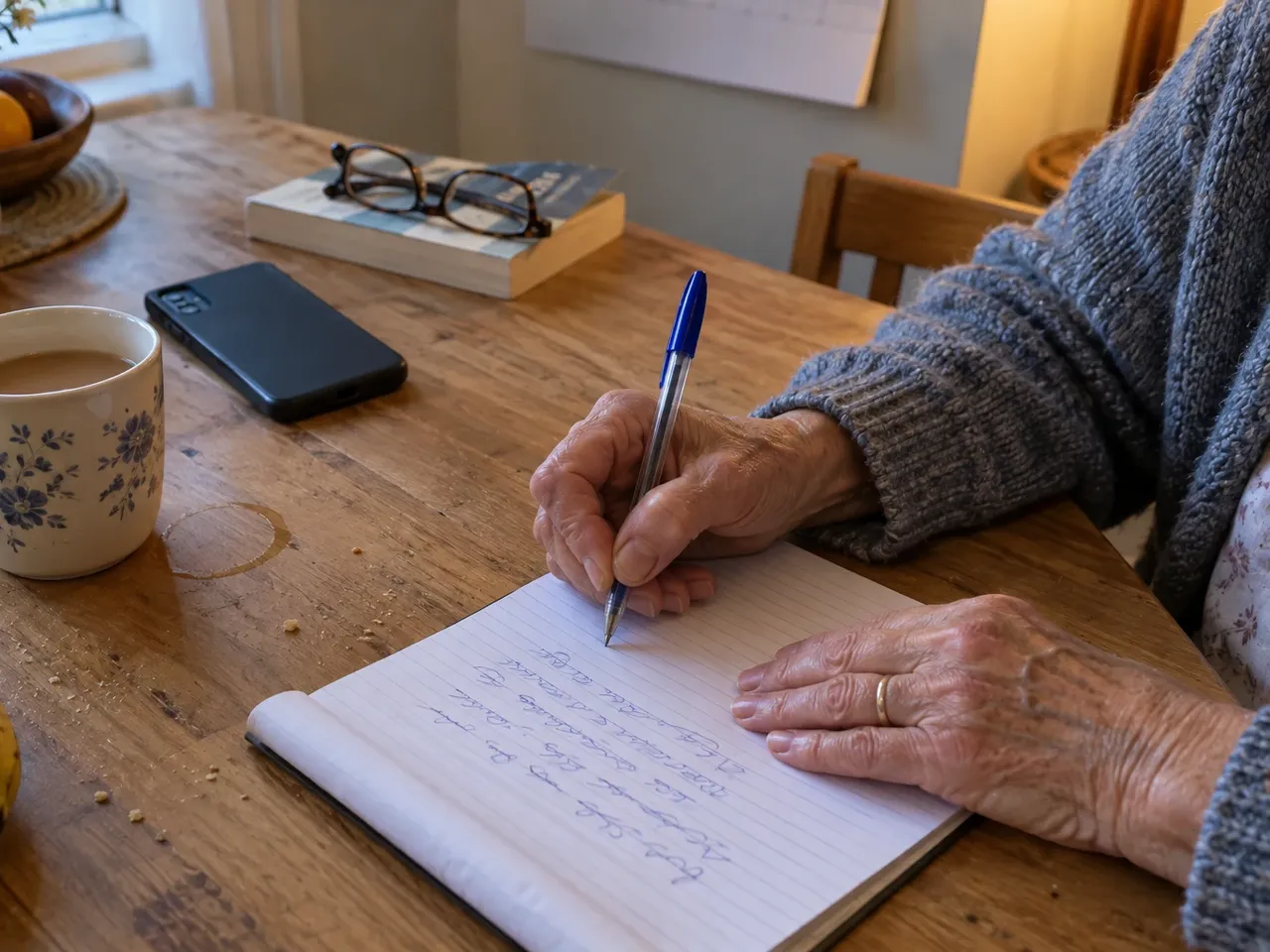
To print at home and fill in by hand. Good for a binder kept with your other papers.
A file you type into on a computer, save, and change when something in your life changes. Print it when it is ready.
The same planner set in larger type with more room to write, for anyone who finds small print tiring.
Before it is sent, you tell us which banks, KiwiSaver provider and vehicles you have. The planner arrives with those already in it, so the page your family turns to is about you, not a blank list of every bank in the country.
Every fact in it is tied to the official page it came from and carries the date we read it. If a rule has changed since, you can see how old our reading is.
Handwritten, in large print, or typed. The planner is meant to be filled in, read again and kept up to date, not finished in one sitting.
The checklists and guides beside this planner are free and open to anyone. Read them before you decide. They are the same work, done the same way.
These pages are free, with nothing to sign up for. They show how we check a fact and how we write, so you can judge the planner by them.
It is a set of pages you fill in while you are alive and well. It tells the person who settles your estate who to tell, where your accounts and papers are, and what you would like done. It is a record of facts, kept in one place.
When you order, you tick the banks, the KiwiSaver provider and the vehicles you have. The planner is prepared with a page for each, carrying that organisation's own rule and how to reach it where they give a route, dated. You fill in the rest by hand or on screen.
Anyone in New Zealand who wants to leave their affairs in order. Many people fill it in for themselves. Some fill it in with a parent, at the kitchen table, a section at a time.
Not yet. For now the planner is digital only: it comes by email and you print it at home, or type into it on a computer.
No to both. It is general information and a place for your own records. It does not replace a will, and it holds no wording for you to sign. For advice about your own situation, speak to a lawyer in New Zealand.
The planner is sent to the email address you give at checkout, laid out to print, with a link to your own private page that holds every other copy. You choose the one you want, fill it in at your own pace, and tell the person you trust where it is kept.
It never asks for a password. It asks where your password list is kept. For accounts, it asks for enough that your family knows each one exists and where it is held.
It has a place to note any interest in Māori freehold land and points to the Māori Land Court, which deals with succession to that land. It does not give advice about it.